Meta has expanded its personal artificial intelligence assistant with the launch of Muse for Small Business, introducing dedicated skills and third-party integrations designed to help commercial operators handle day-to-day operations. The rollout follows the initial release of the Muse assistant in the United States and Canada, moving the software from a personal task manager toward an operational utility for commercial accounts. As announced on the Meta newsroom, the release focuses on bridging native Meta platforms with external software that independent businesses use every day.
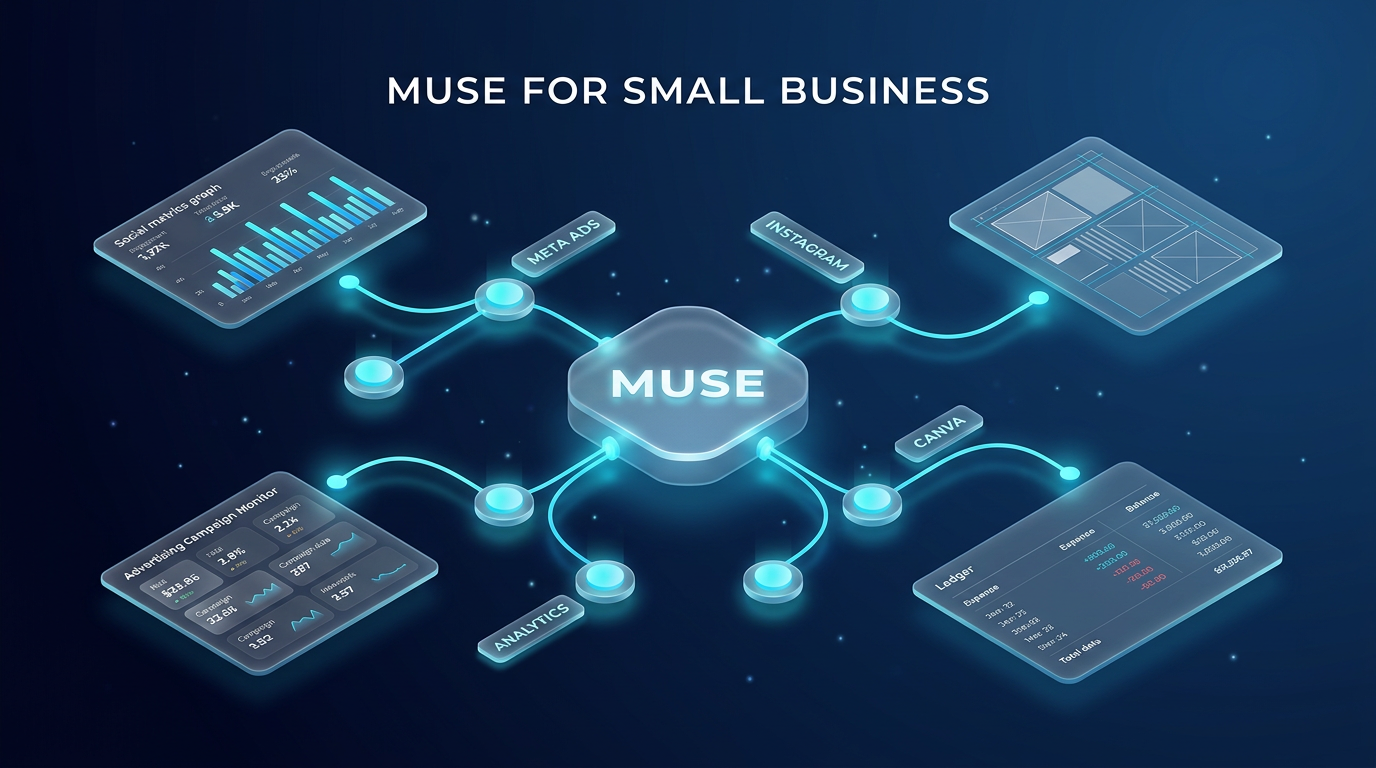
The central premise behind Muse for Small Business is connecting operational context directly to marketing and communication channels. Small enterprise owners routinely juggle inventory, vendor management, bookkeeping, and social channels without dedicated administrative staff. The updated tool provides direct links into Facebook Pages, Instagram professional accounts, and Meta ad accounts to consolidate analytics, customer inquiries, and campaign drafting under a unified interface.
The Core Features of Muse for Small Business
Muse for Small Business introduces prebuilt integrations alongside a developer platform for custom software links. Instead of manually exporting data between dashboards, users can authorize connectors that allow the AI assistant to read account metrics, audience responses, and active campaigns.
According to Meta, the platform incorporates three primary functional layers for commercial users:
- Native channel syncing that pulls performance indicators directly from Instagram professional accounts, Facebook Pages, and Meta advertising dashboards.
- Third-party platform connectors, including an integration with Canva that brings design templates, brand kits, and asset drafting directly into chat conversations.
- An open connector framework hosted at muse.ai/platform that allows third-party services and engineering teams to build custom connectors for unsupported business software.
By connecting to account history, Muse for Small Business interprets brand voice, recurring customer questions, and product catalogs. This context allows the assistant to generate relevant copy and provide recommendations based on actual business activity rather than generic prompts.
Why Practical Connectors Matter for Business Operators
Solo operators and independent retailers often spend significant hours on non-revenue administrative tasks. Tom Mulholland, owner of Mulholland Grocery in Malvern, Iowa, noted in the release that he works around 65 hours per week balancing operational trade with administrative duties. For physical businesses, time spent navigating fragmented back-office tools directly reduces time available for direct production and service delivery.
The Canva integration represents a practical example of reducing interface switching. Canva Chief Product Officer Cameron Adams stated that connecting the design platform to Muse embeds existing brand templates directly inside conversational planning. When an operator asks the assistant to organize a seasonal promotion, the system pulls brand colors and approved layout structures into the working conversation, avoiding the need to build design assets from scratch.
Beyond marketing collateral, Meta states that connectors can link to storefronts, financial books, and customer records. Rather than logging into separate dashboards to review weekly numbers, users can request summaries across connected software using conversational instructions.
Practical Capabilities and Use Cases
Meta highlighted several concrete use cases demonstrating how Muse for Small Business operates across live company records. Each case relies on existing data feeds rather than isolated text generation.
One core application involves cross-channel performance reviews. Business owners can instruct the assistant to evaluate annual sales numbers, advertising campaigns, and social media reach simultaneously to produce target plans for the coming fiscal cycle. Because the system can read both marketing metrics and connected ledger data, it identifies discrepancies between ad spend and actual sales conversions.
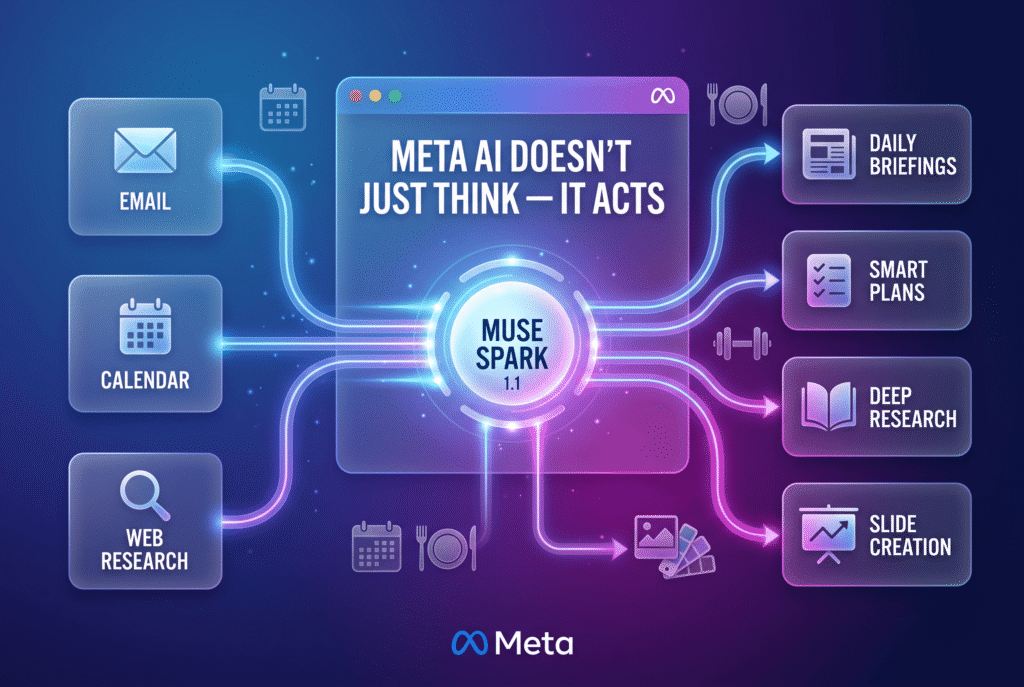
Inbox and task triaging is another operational focus. The assistant scans connected email inboxes, calendar schedules, and operational notices to compile prioritized summaries, highlighting messages that require immediate owner responses. The platform also includes a proactive monitoring capability that surfaces unread priority inquiries and drafts preliminary replies for approval.
Expense tracking forms an additional practical workflow. When linked to accounting records, users can prompt the assistant to analyze monthly financial statements and surface unusual line items or irregular vendor charges. Instead of manual spreadsheet auditing, owners receive focused alerts about budget variances.
Pricing, Rollout, and Platform Access
Meta confirmed that Muse for Small Business is available to users in the United States and Canada across current Muse applications. Core functionality remains free for standard business needs, while subscription tiers are planned for organizations requiring higher processing volume or advanced capabilities.
The company confirmed that additional native connectors and operational skills will roll out over coming months. Developers and SaaS vendors seeking to build direct connections can submit integration proposals through the partner portal. Users can configure active connections and explore preconfigured prompt workflows directly inside the application settings tab.
Putting Connected Agents to Work in Business Systems
While turnkey tools like Muse for Small Business simplify basic administrative tasks, complex companies often require deeper architectural control. Wasif builds bespoke workflows that integrate proprietary databases, custom CRM systems, and multi-step marketing operations. In many implementations, prebuilt consumer agents lack the fine-grained data routing needed to coordinate operations across specialized inventory management, field dispatch, and lead qualification pipelines.
For teams managing high-volume client communications and transactional operations, combining custom Agentic AI Systems & AI Workforce solutions with structured workflows in Go High Level provides predictable governance that standalone chat interfaces cannot match. Native assistants serve well for ad-hoc queries, but scalable infrastructure requires deterministic automation that logs records, triggers webhooks, and manages customer handoffs with total reliability. As platforms like Muse expand access to everyday businesses, structured automation will remain the backbone of high-efficiency enterprise operations.
If you want to build reliable automated workflows and custom AI systems tailored to your specific business operations, reach out directly at wasifahmed.dev/contact.