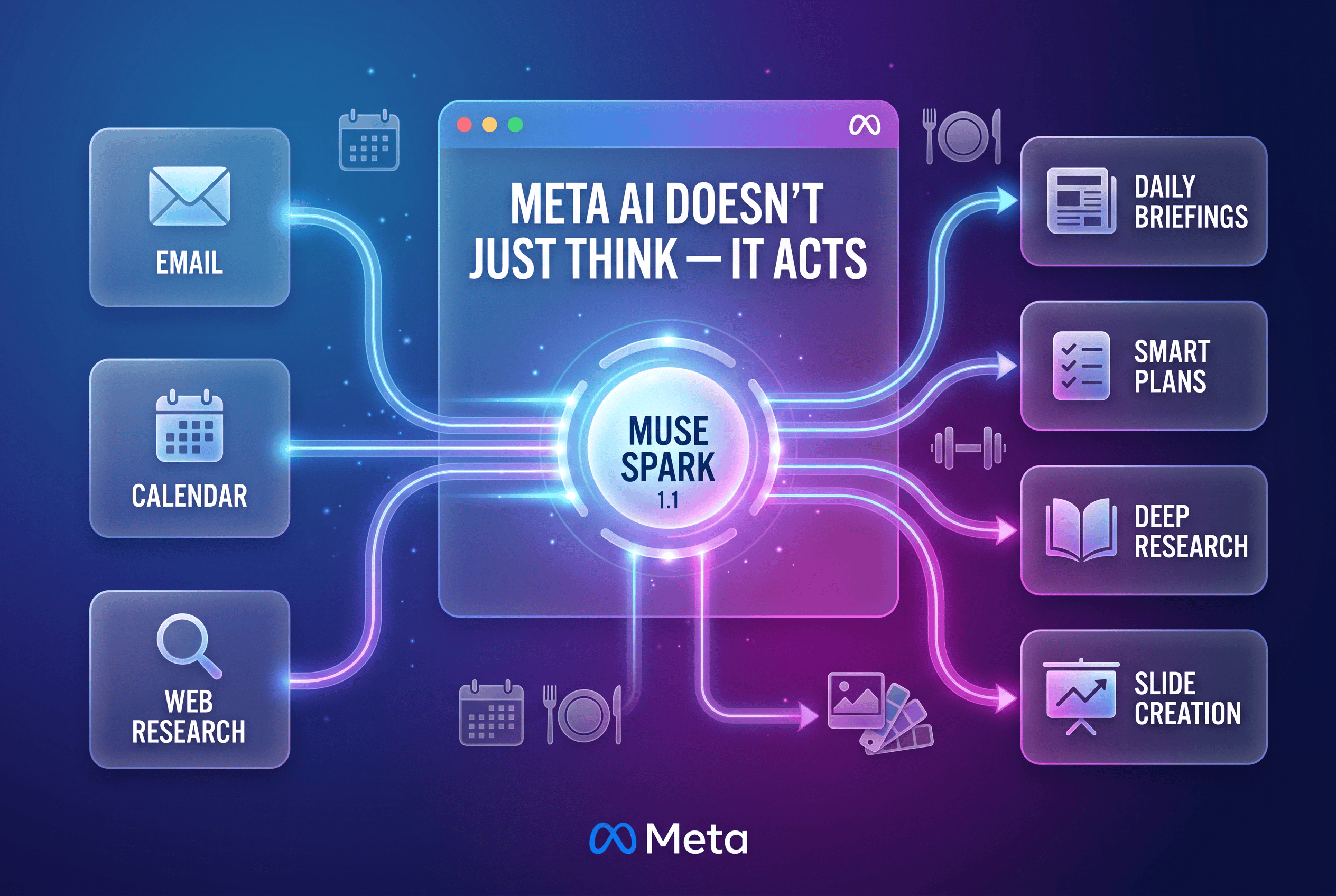
On July 24, 2026, Meta announced an update to its conversational assistant powered by the new Muse Spark 1.1 model. As announced on the Meta Newsroom, the assistant can now execute multi-step routines, read connected calendars, and create structured presentations rather than simply answering text prompts. This update moves the platform from a passive conversational tool into an active personal assistant.
Understanding how these Meta AI agent features operate helps team leaders evaluate whether native consumer assistants can handle routine planning and research tasks alongside dedicated business tools. The features are rolling out immediately in select markets across the web interface and mobile applications, with WhatsApp support scheduled for subsequent weeks.
Key Capabilities Introduced in Muse Spark 1.1
Meta built the Muse Spark 1.1 architecture to sustain multi-step task execution without requiring continuous user prompts. Rather than finishing after a single chat response, the system runs scheduled background tasks and connects directly with external productivity applications.
Key functional additions in this release include:
- App and calendar connections: Syncs with calendar and email services to deliver scheduled daily briefings and highlight double-booking conflicts.
- Background monitoring: Performs recurring checks for updates, such as weekly project schedules or price updates on e-commerce product listings.
- Real-time guidance: Accepts live feedback while generating long-form reports, allowing users to modify tone or structure mid-generation.
- Visual deck creation: Formats unstructured web research into organized slide decks and saves generated files in a single workspace repository.
Who Benefits from Active Meta AI Agent Features
Small business owners and operational teams benefit most from automated scheduling and recurring research updates. Instead of manually cross-referencing team calendars or gathering market research across multiple browser tabs, the platform compiles consolidated briefs at set times.
For example, an e-commerce seller checking competitor pricing can instruct the assistant to scout online listings every Monday morning. The platform collects product prices, evaluates listing details, and formats the output into a single slide deck ready for review.
Content strategists and managers who coordinate social media management workflows also gain faster research capabilities. The assistant synthesizes community trends from public social posts and formats them into actionable creative briefs without requiring manual manual web curation.
Practical Implications for Business Operations
While consumer platforms add native task execution, operational teams must evaluate where built-in features end and custom workflow infrastructure begins. Built-in assistant tools excel at individual personal planning and quick summaries, but enterprise workflows still require strict data governance, error handling, and dedicated database logging.
Businesses relying on structured system integration often combine native chat assistants with bespoke pipelines. Platforms like Make.com and custom API wrappers provide the reliability needed for mission-critical client databases, CRM records, and multi-app triggers.
Organizations testing these native assistant updates should start by assigning low-risk internal research tasks. Monitoring how the assistant handles complex calendar rules or unstructured web searches reveals whether its autonomous planning matches operational standards.
What This Changes for Client Builds
When building AI automation infrastructure for clients, Wasif evaluates how native platform capabilities reduce custom development overhead. Native agent features mean basic personal assistant tasks no longer require custom external integrations.
Wasif focuses on connecting high-level platform intelligence with robust backend logic. While native assistants handle individual daily briefings, Wasif constructs end-to-end architectures that link consumer touchpoints directly to internal CRMs, automated booking systems, and production pipelines.
If you want to integrate intelligent task agents and custom workflows into your operational stack, reach out through the contact page to start the conversation.