Claude plugins are now the primary packaging format for third-party extensions across Anthropic’s platform. On September 25, 2026, Anthropic announced a dedicated directory submission portal that lets developers submit extensions, follow them through automated validation and review, and inspect real-time usage metrics once published.
The update unites the Model Context Protocol (MCP) and custom Agent Skills into a single distribution pipeline. As announced on the Claude blog, developers on paid plans can now register single connectors or full multi-tool repositories for review, giving teams a clearer path to publish tools directly to Claude web and desktop users.
The Core Architectural Changes in Claude Plugins
Claude plugins function as containers that wrap MCP connectors, Agent Skills, or both into a standardized package. Previously, configuring external data sources or custom tooling required individual setups that varied between desktop configurations and custom environments. The new structure simplifies distribution by grouping these building blocks under one discoverable listing.
Developers can prepare Claude plugins in two formats depending on project requirements:
- Single MCP connector: Connects directly to an external remote MCP server to provide external context or API actions.
- Plugin bundle: Combines multiple MCP servers with custom skills inside a GitHub repository, supporting Claude Code additions like language server protocols (LSPs), custom commands, hooks, and sub-agents.
The company notes that existing individual skills and connectors currently listed in the directory do not need immediate changes. They will continue to function as modular components, with planned migration paths allowing developers to convert standalone connector listings into full Claude plugins over time.
Submitting Claude Plugins Through the Developer Portal
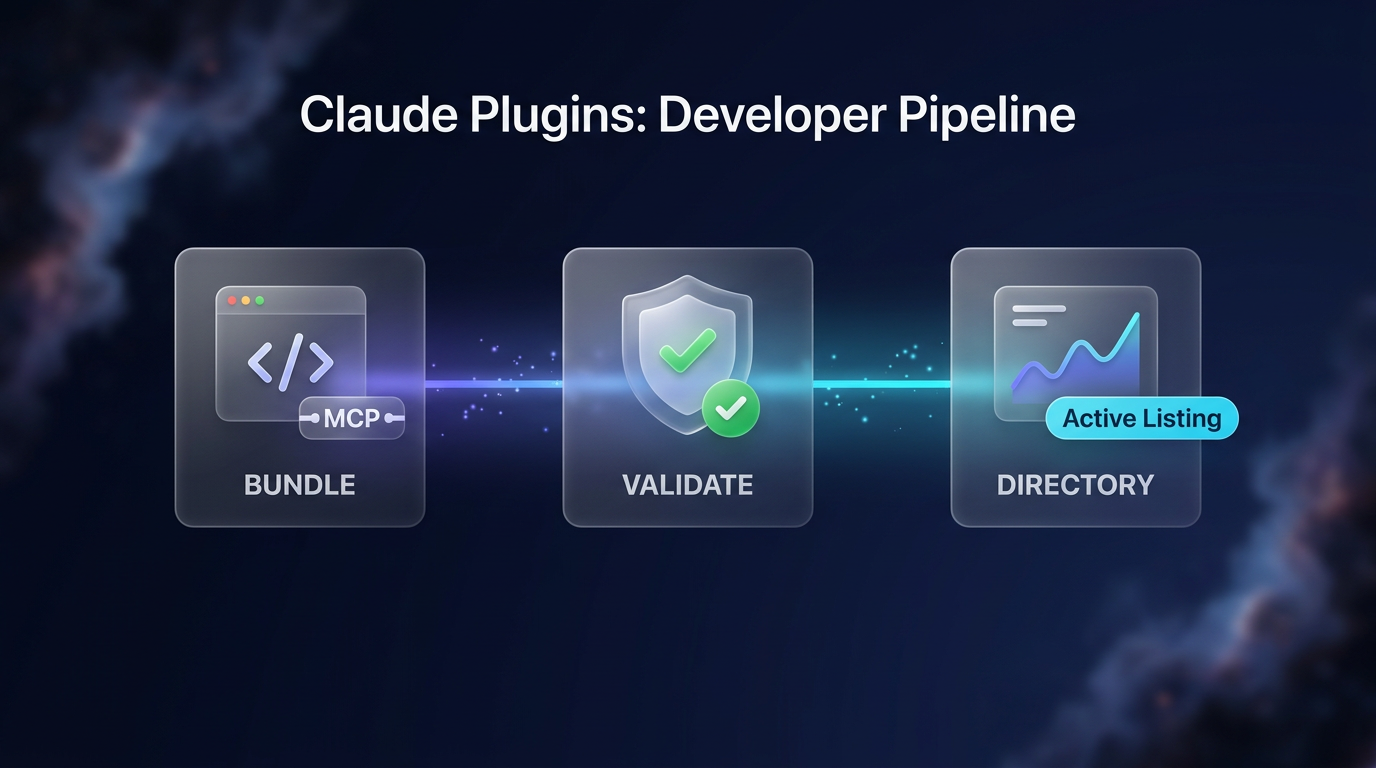
The directory submission portal introduces structured lifecycle management for building and publishing Claude plugins. Access is currently available to developers with paid Claude accounts. Once a developer submits a manifest or repository URL, the system provides immediate automated verification.
Every submission undergoes automated security and structural scans upon entry. The portal interface displays validation results alongside specific code recommendations if issues arise, allowing developers to address potential compliance or safety flags before human review begins.
Developers retain control over when an approved submission becomes visible to the public. Once technical verification and policy reviews clear, the portal allows authors to schedule or trigger immediate publication to the Claude directory. This prevents partially configured tools from appearing prematurely to end users.
Runtime Analytics and MCP 2.0 Protocol Support
Monitoring tool adoption has historically been a challenge for external developers building on language models. The portal resolves this by adding post-launch analytics panels. Authors of published Claude plugins can monitor total installations broken down by product surface, such as standard Claude chat versus Claude Code, as well as by active version numbers.
Discovery metrics are also tracked within the portal. Creators can review how many times their directory entry was viewed and examine the specific search queries that brought users to the listing. These data points help teams refine descriptions, commands, and keywords to reach relevant audiences.
Alongside the directory release, Claude now supports the updated Model Context Protocol specification, referred to as MCP 2.0. The standard implements a stateless architectural core designed to improve reliability across distributed server instances. Developers building Claude plugins can also implement two protocol extensions:
- MCP Apps: Generates interactive user interface elements inside the standard chat feed.
- Enterprise Managed Auth: Supplies zero-touch OAuth authentication handling for secure enterprise system integration.
Practical Considerations for Builders and Teams
For organizations maintaining custom workplace integrations, the rollout provides a clearer deployment standard. Teams connecting CRM records, documentation repositories, or task queues can now bundle their tools instead of requiring staff to manually configure disconnected connector addresses. When designing complex agentic AI systems, having predictable authentication and unified packaging simplifies governance across departments.
However, developers must plan for directory review cycles. Submissions are not instantly indexed; automated checks and manual compliance safety reviews mean teams should budget validation time prior to internal or public release dates. Furthermore, developers relying on enterprise single sign-on should verify whether their identity providers match the requirements of the Enterprise Managed Auth extension before rebuilding existing auth flows.
Frequently Asked Questions
Who can access the new developer submission portal?
The directory submission portal is available to developers who maintain an active paid Claude subscription. Free tier accounts can install approved tools from the directory but cannot submit new packages through the portal.
Do existing MCP connectors break with this update?
Existing MCP connectors and Agent Skills remain fully supported and require no structural alterations. The directory continues to list them, and Anthropic has stated that developers will later have options to transition standalone connectors into bundled Claude plugins.
What is the difference between an MCP connector and a plugin bundle?
A single connector points directly to an isolated remote MCP server endpoint. A plugin bundle connects a repository containing multiple servers, specific skills, and optional developer tooling such as Claude Code hooks and commands.
Putting These Updates Into Practice
Wasif builds custom workflows that bridge external business databases with AI workspaces, frequently implementing automated pipeline structures using AI automation to eliminate manual data entry. Standardized protocols like MCP 2.0 reduce maintenance overhead when connecting third-party APIs to agent platforms. When client architectures require secure authorization and clear discovery, moving modular tools into tested Claude plugins ensures dependable day-to-day operation.
If you are planning to build custom connectors, workflow integrations, or internal Claude plugins for your business operations, reach out to Wasif Ahmed to discuss your architecture.