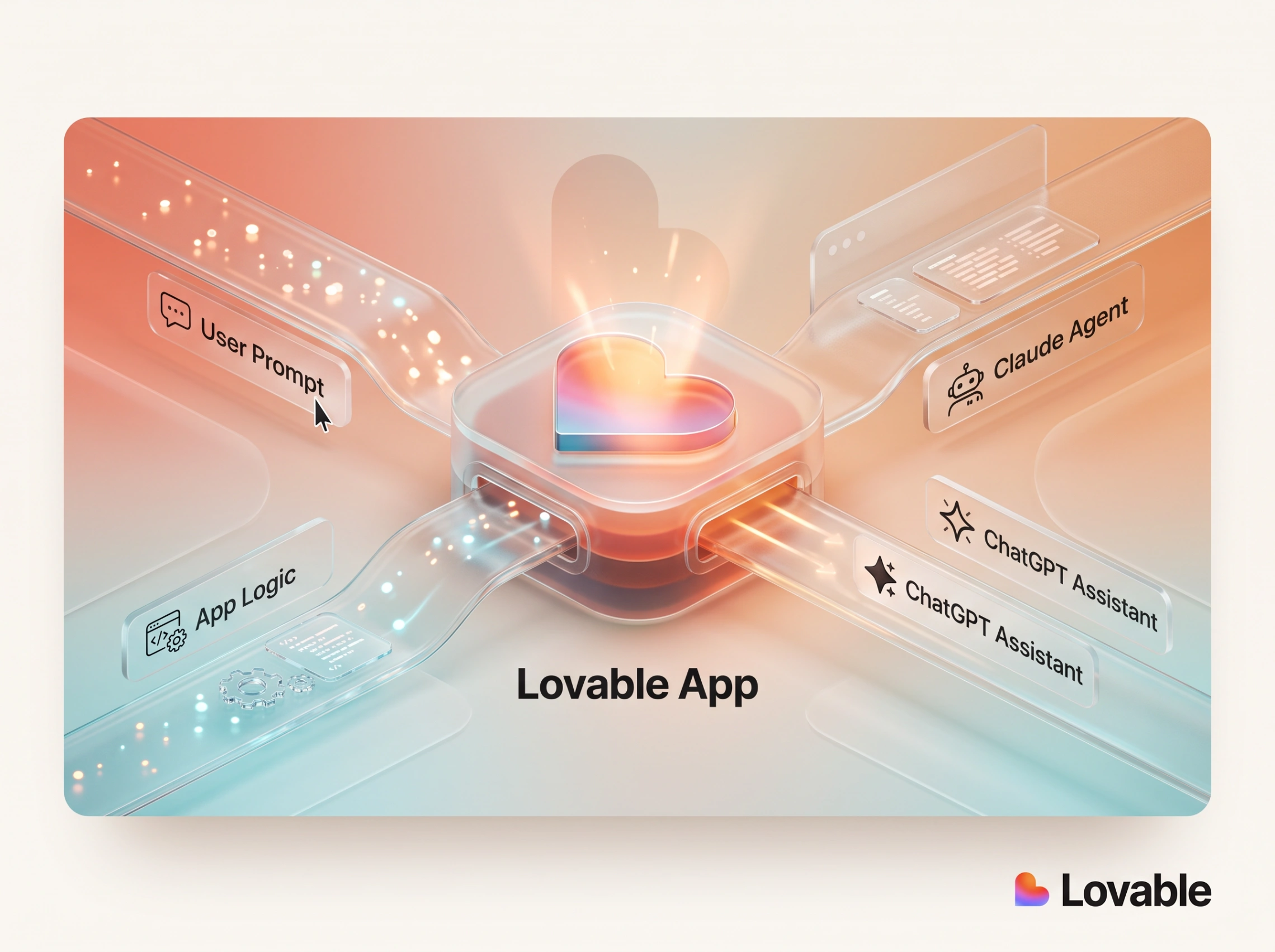
On July 15, 2026, Lovable introduced a major update allowing custom-built applications to run directly inside AI assistants. These new Lovable agent integrations leverage the Model Context Protocol (MCP) to bridge the gap between custom software and conversational AI tools. Instead of forcing users to toggle between different browser tabs, businesses can now run their custom apps inside ChatGPT and Claude.
What Changed with the Lovable Agent Integrations Release
As announced on the Lovable blog, any publicly published application built on the platform can now host its own MCP server. Model Context Protocol acts as an open standard that allows large language models to securely read app logic and execute specific tasks. When an AI tool acts as an MCP client, it can read a plain-language list of everything your custom app is designed to do.
The setup process requires minimal manual configuration. Lovable automatically reads the logic of your existing project and suggests the appropriate scope for your server. Developers can then refine these actions and choose who has permission to trigger them.
- Hosted Infrastructure: Lovable manages and hosts the MCP server, keeping it updated as the protocol evolves.
- Granular Permissions: Access can be limited to signed-in users, paying customers, or opened to the public.
- Automatic Syncing: Any updates published to the main app are immediately reflected in the MCP server.
- OAuth Security: Built-in authentication ensures that sensitive business data remains protected.
Why MCP Support Matters for Business Builders
Many business owners build custom internal tools but struggle with team adoption because employees dislike switching between multiple portals. By utilizing Lovable agent integrations, companies can bring their proprietary databases and logic directly to where their team already works. This shifts custom software from a passive destination into an active utility inside conversational workspaces.
For example, a sales team can query their custom pipeline tracker or generate an instant client quote without leaving their active Claude workspace. This setup turns standard AI assistants into highly specialized tools that understand specific company rules and data structures. When designing custom tools, combining these features with professional web designing and development ensures a polished user experience.
Practical Implications and Use Cases
Consider a marketing agency that builds a custom brand voice tool in Lovable. Instead of copy-pasting text, a writer can ask ChatGPT to run a draft through their Lovable brand-guideline app to verify persona alignment. The assistant handles the API call, processes the rules, and returns the refined text in the chat.
Another practical scenario involves operational workflows. A logistics manager could build an inventory tracking app on Lovable, then use Claude to check stock levels and submit reorder requests directly to their database. This capability also pairs perfectly with broader AI automation strategies, allowing tools like Make.com to trigger actions based on the structured data returned by these agent-enabled apps.
A Grounded Outlook for AI-Native Software
This update reflects a broader shift in how people interact with software. Users increasingly prefer a unified conversational interface over fragmented SaaS tools. While MCP is still an emerging standard, its adoption by platforms like Lovable suggests a future where every custom app is expected to have an AI-accessible API by default.
Security remains a critical consideration when exposing app logic to external LLMs. However, the inclusion of OAuth standards and automated security checks during the publishing phase mitigates the primary risks for enterprise users. As more platforms adopt this protocol, the boundary between standalone apps and AI assistants will continue to blur.
What This Changes for Client Builds
Wasif builds custom business systems that combine database structure with intelligent automation. With these new Lovable agent integrations, Wasif can now deliver applications that do not just sit on a URL but actively participate in a client’s daily AI workflows. For businesses utilizing complex database setups, Wasif connects these custom Lovable front-ends to backend systems, ensuring that when an AI agent triggers an action in Claude, the data flows cleanly to the rest of the business suite.
If you want to build a custom application that connects directly to your team’s AI assistants, reach out to Wasif at the contact page to discuss your project.