Claude Managed Agents is expanding into private beta with a self-hosted option, allowing engineering teams to run agent control planes inside their own infrastructure. The service originally launched as a cloud service managed directly on the Claude Platform. While Anthropic previously added self-hosted sandboxes for organizations wanting their code to stay local, teams running unattended systems on production repositories needed control over the entire operational stack. With this release, developers can operate autonomous agents that interact directly with internal code repositories, internal issue trackers, and continuous integration systems while keeping all orchestration components inside their private environments.
The company announced that the self-hosted deployment model operates as a private beta. Teams interested in deploying it must coordinate access through their account representatives. The launch addresses practical enterprise constraints where security policies forbid third-party hosting of credentials, databases, and operational logs.
The Architecture Behind Self-Hosted Claude Managed Agents
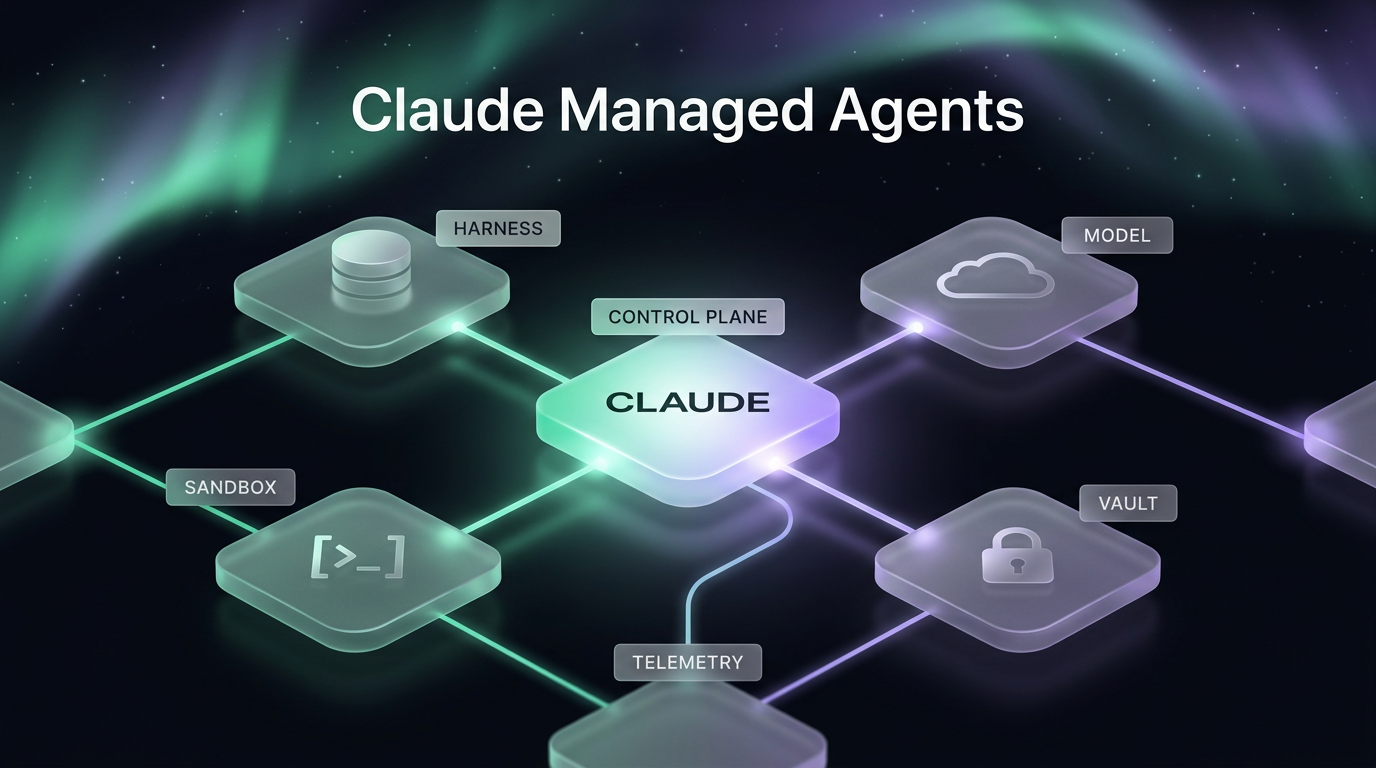
Deploying Claude Managed Agents in your own infrastructure means hosting the entire operational harness rather than relying on external control planes. In this model, you maintain the server, the backing database, and the worker nodes where tool commands execute. Developers continue writing software using the same core composable application programming interfaces available in the cloud-hosted version, avoiding platform rewrites.
Under the self-hosted model, several core components move into company-controlled environments:
- The Control Plane Server: Manages the orchestration loop, agent state, and tool scheduling across compute instances.
- Internal Session Storage: Stores all interaction history and logs inside your own database instances.
- Execution Worker Nodes: Operates sandboxes for shell utilities and file manipulation tools inside company networks.
- Flexible Model Routing: Forwards model inference calls directly to Anthropic, through corporate gateways, or via providers including Amazon Bedrock, Google Cloud Agent Platform, and Microsoft Foundry.
If an enterprise maintains a zero data retention agreement with Anthropic, that policy applies to inference calls generated by self-hosted agents just like standard Messages API requests.
Why Self-Hosting Matters for Internal Engineering Workflows
Autonomous agents have graduated from experimental chat helpers to operational tools. In modern software environments, engineering teams assign agents to resolve broken continuous integration builds, execute regression tests on release branches, triage infrastructure alerts, and address bug backlogs. These tasks require write access to source code and connectivity to corporate utilities.
Running unattended processes with deep repository access creates friction when control systems run on third-party servers. When organizations evaluate Agentic AI Systems & AI Workforce software, data boundaries remain the primary hurdle. By operating the entire server and database stack on-premise or within a private cloud VPC, companies maintain their existing data governance policies without sacrificing the developer conveniences of high-level agent APIs.
According to the official announcement on the Claude documentation portal, this update removes the requirement for security-conscious teams to engineer their own custom orchestration harnesses from scratch.
Four Core Security Principles of Claude Managed Agents
When an autonomous system operates without a human supervising every individual command, security boundaries must exist at the architectural layer. Anthropic structured Claude Managed Agents around four specific isolation rules that function identically across hosted, hybrid, and self-hosted environments.
1. Separating the Harness from the Execution Sandbox
The control harness acts as the brain that communicates with Claude, while the sandbox acts as the execution layer where code commands run. Keeping these two elements isolated prevents an agent script from altering the control loop. Sandboxes spin up on demand only when tools require them, and operational history remains outside the sandbox as an append-only event log. Even if a specific sandbox environment terminates unexpectedly, the overall agent run continues without losing state.
2. Isolating Secrets from Sandbox Environments
Exposing production API keys or tokens inside an active terminal session presents severe risks. Claude Managed Agents prevents this by keeping authentication vaults entirely separate from sandboxes. For Model Context Protocol tools and standard API interactions, a proxy residing outside the execution sandbox injects credentials directly into outgoing network requests. In the self-hosted deployment, teams can connect these proxy mechanisms to their own corporate secrets management infrastructure.
3. Restricting Network Egress
Unrestricted internet access in automated code runners introduces data leakage risks. The platform enables administrators to restrict network egress to an explicit list of authorized hostnames. For an automated agent assigned to inspect repository pull requests, administrators can limit outbound connections strictly to an internal Git host and a package registry. When self-hosting sandboxes, network engineers can mirror these restrictions directly through their existing corporate firewalls.
4. Comprehensive Audit Trails via OpenTelemetry
Accountability requires complete logging of every programmatic action. The platform maintains a detailed audit record of each step, tool call, and returned payload. These records export over the standard OpenTelemetry protocol, permitting engineering teams to forward agent telemetry into existing enterprise monitoring stacks alongside microservice logs.
Practical Implications for Enterprise Builders
This update changes how technical teams plan internal agent infrastructure. Previously, choosing Claude Managed Agents meant accepting hosted orchestrators, which excluded companies with strict compliance mandates. The private beta allows software architects to integrate autonomous agents into corporate pipelines while maintaining complete control over their data footprint.
For organizations deploying AI automation pipelines alongside custom internal tooling, this architecture balances safety with execution speed. Instead of managing low-level prompt loops, memory buffers, and retry logic, developers rely on standardized agent primitives while keeping all runtime artifacts within their internal perimeter.
Frequently Asked Questions
What is self-hosted Claude Managed Agents?
Self-hosted Claude Managed Agents is a private beta deployment option that lets organizations run Anthropic agent infrastructure inside their own private cloud or on-premise servers. It includes the orchestration harness, sandboxes, credential management, and session databases.
Where are model inference requests routed?
Organizations can route model requests directly to Anthropic, through their own private API proxies, or across cloud partners such as Amazon Bedrock, Google Cloud Agent Platform, or Microsoft Foundry.
How does the platform handle tool credentials securely?
Credentials never enter the sandbox where code executes. Instead, an external proxy adds necessary tokens to outgoing requests, and self-hosted deployments can pull credentials directly from corporate secrets managers.
Where This Fits in Production Builds
Wasif builds custom automation workflows, CRM integrations, and agent-driven architectures for businesses that need dependable execution. In client projects involving sensitive databases and proprietary code, off-the-shelf cloud agents often trigger compliance reviews. The arrival of self-hosted control planes enables teams building Custom Software Development assets to run agentic triage and maintenance scripts without exposing operational telemetry to external platforms.
Conclusion
The release of self-hosted Claude Managed Agents marks a clear shift toward enterprise-grade, privacy-first agent infrastructure. By decoupling the control plane from public cloud hosting, Anthropic gives technical teams the security controls needed to deploy autonomous workflows on sensitive codebases. If your organization wants to design secure internal automation or deploy reliable autonomous workflows, reach out through the contact page to discuss your architecture.