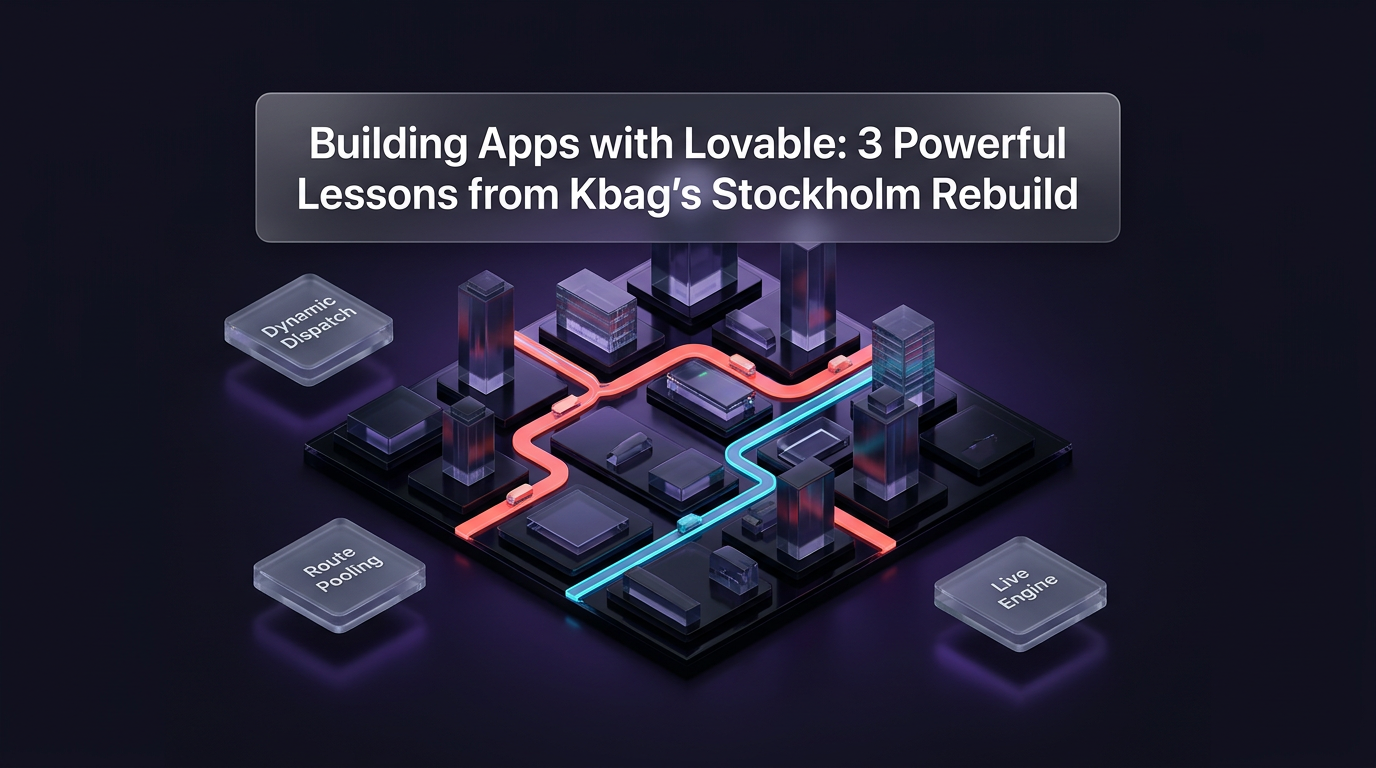
Building specialized business software once required dedicated software teams, months of discovery, and substantial capital. A case study from Swedish logistics company Kbag shows how building apps with Lovable changes that timeline, allowing domain specialists to turn complex algorithmic ideas into production-ready platforms in weeks.
Thomas Kednert, known locally as Kedde, operated a groundworks company in Rotebro, north of Stockholm, for over two decades. In his day-to-day operations, he noticed a recurring inefficiency in construction material delivery and waste collection.
Traditional suppliers relied on rigid, zone-based pricing and routing. As a result, fully loaded trucks frequently crossed Stockholm to drop off a single bag of soil and returned empty, while another empty vehicle drove nearby to collect construction debris.
Kedde envisioned a shared transport model that would pool waste pickup and building material delivery into coordinated runs, similar to ride-pooling services. The project moved from concept to execution when his technical collaborator began building apps with Lovable to build a dynamic logistics engine.
Rethinking Traditional Zone-Based Dispatching
The standard model in bulk material hauling divides service regions into broad geographic zones. While simple to administer on paper, zone pricing fails to reflect actual vehicle availability, route efficiency, or live traffic conditions. It often leads to deadhead miles where trucks travel without cargo.
Kbag replaced zone structures with dynamic, address-based calculations. When customers place orders on the web platform, the engine calculates a unique rate based on live factors rather than fixed geographic bands. The team set two specific financial targets before writing code: lower end-customer prices by 50 percent compared to market rates, and achieve 50 percent higher operating margins than industry peers.
Technical Architecture and Real-Time Fleet Integration
The customer-facing portal at kbag.se provides a straightforward checkout experience where buyers place orders and track their delivery vehicle on Google Maps. However, the operational complexity of building apps with Lovable at this scale sits in the underlying backend and dispatcher interfaces.
The system connects directly to Volvo Connect Fleet Management through a real-time API. This integration feeds continuous vehicle data directly into the routing and pricing algorithms, accounting for multiple live parameters:
- Estimated transit duration based on live location
- Fuel consumption patterns across distinct routes
- Current payload weight on the truck bed
- Remaining physical cargo capacity
- Driver hours remaining under commercial transport regulations
Drivers and dispatchers operate from dedicated mobile interfaces that display optimized route sequences, active vehicle coordinates, and incoming order queues. By combining telematics with dynamic routing, the platform calculates pricing that matches current fleet capacity.
Development Timeline, Costs, and Growth Metrics
The technical architect developed the initial working version of Kbag over a three-week period during the 2025 winter holidays. The Lovable platform costs for that initial build totaled roughly $500. This low barrier is exactly why building apps with Lovable allowed the team to launch quickly without external venture funding or lengthy development cycles.
Kbag launched commercial operations in spring 2026 using a single crane truck to manage deliveries and pickups across Stockholm. Within three months of launch, the business expanded from one truck to five vehicles. The operational data confirmed that the business met its dual goals: customer pricing dropped by half relative to traditional providers, and operational margins improved significantly. The company has since expanded its service from residential consumers to commercial business-to-business accounts.
FAQs
What is Lovable and how is it used for software development?
Lovable is an AI-powered software builder that allows developers and founders to generate, edit, and deploy full-stack web applications using natural language prompts. It generates standard code architectures, connects to backend databases, and deploys functional applications rapidly.
Can Lovable connect to complex external APIs like fleet telematics?
Yes. Applications built on Lovable can integrate with third-party REST APIs and telematics platforms, such as Volvo Connect or Google Maps. This allows developers to ingest real-time data streams and build reactive business logic.
Is software built with AI app builders ready for real production workloads?
Yes, when paired with solid architecture and reliable third-party infrastructure. As demonstrated by Kbag handling commercial fleet operations and live payment transactions, applications built with modern AI platforms can support mission-critical, day-to-day operations.
What Building Apps with Lovable Changes for Client Builds
For founders and operators, the Kbag project highlights a shift in custom development. High software costs previously forced companies into off-the-shelf software that rarely matched their unique operational workflows. When custom logic required months of programming, domain experts often stayed with inefficient manual processes.
Wasif designs custom systems combining AI automation and custom web interfaces to solve operational bottlenecks without massive development budgets. Teams can integrate live data sources, build focused operational views for staff, and pair those interfaces with reliable CRM tools like Go High Level to manage customer communication automatically. When specialized logistics, scheduling, or quotation logic is required, modern AI-driven development tools make full customization practical.
If you want to streamline your business operations with custom automation or web applications, reach out to Wasif Ahmed to discuss your project requirements.