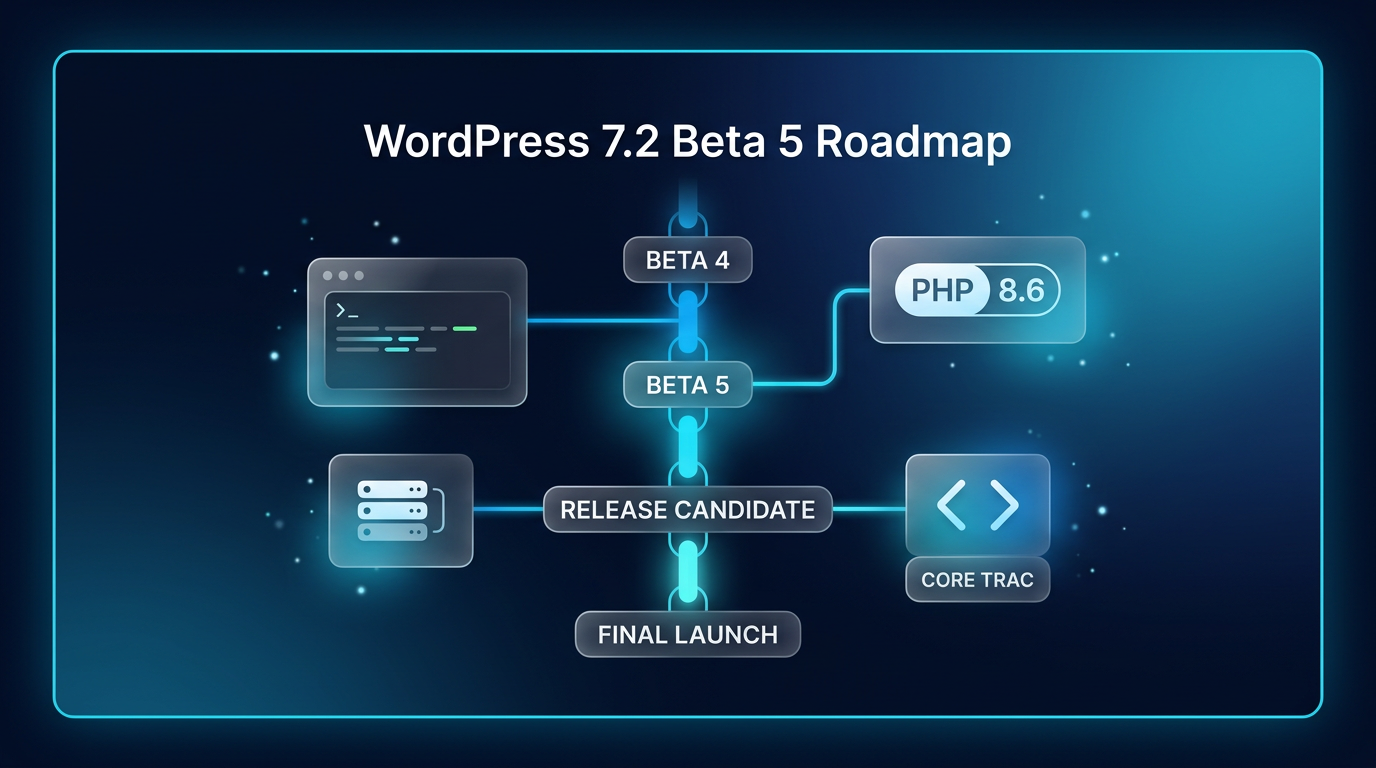
The release of WordPress 7.2 Beta 5 marks another milestone in the release cycle of the web platform. As announced on the WordPress news blog, this pre-release build is intended strictly for development and testing environments. Site owners and administrators should avoid deploying this version to production systems or mission-critical platforms, opting instead for dedicated staging environments or local installations.
With the scheduled general release set for December 8, 2026, Beta 5 concentrates on stabilization, bug fixing, and compatibility checks. Development teams have refined core functionality based on Trac tickets and Gutenberg commits closed since November 3, 2026. This release packages key security protections, accessibility upgrades, and compatibility adjustments before Release Candidate milestones commence.
Key Core Changes in WordPress 7.2 Beta 5
The primary focus of WordPress 7.2 Beta 5 is addressing edge-case bugs and improving core utility for administrators and developers. Unlike major milestone releases that introduce broad conceptual overhauls, Beta 5 refines specific architectural interactions across the administrative interface.
Security enhancements include new automatic email notifications dispatched whenever an application password is created. Application passwords grant external scripts and REST API clients authorized entry without sharing primary user login credentials. Alerting site administrators immediately via email whenever a new token is generated reduces unauthorized API usage and flags rogue integrations early.
Accessibility improvements in WordPress 7.2 Beta 5 also target everyday administrative workflows. Navigation inside the WordPress admin toolbar now features cleaner keyboard focus controls, enabling users who rely on screen readers or tab navigation to traverse administrative shortcuts reliably. Visual History controls within the block editor have similarly received accessibility refinements, improving contrast indicators and screen-reader announcements when stepping through historical revisions.
Additional targeted bug fixes resolved in this build include:
- Stronger validation checks and user permission enforcement for Notes reactions across administrative collaboration screens.
- Direct compatibility fixes for MP3 audio file uploads that previously encountered mime-type validation anomalies on select server environments.
- Resolution of unexpected automated update behaviors observed in custom developer setups running Git worktree directory structures.
- Updated administrative error states for failed background database processes during pre-release migration routines.
Refinements to the Ipsum Default Theme
Every major WordPress iteration pairs with an updated default theme designed to demonstrate the newest capabilities of the block editor and site editing tools. In WordPress 7.2, the new default theme is Ipsum, which receives continued polish in this beta release.
Accessibility remains a core priority for Ipsum. In WordPress 7.2 Beta 5, keyboard focus indicators have been adjusted to ensure high visual contrast across dark and light palettes. The theme now fully respects operating system preferences for reduced motion, automatically disabling or softening view transitions between page loads and template changes for users with vestibular sensitivities.
Styling options have expanded across custom block patterns and global style presets. Designers can access updated font pairings and adjusted block spacing options without modifying stylesheet files directly. Under the hood, stylesheets have been restructured to eliminate redundant CSS selectors, shrinking the default asset footprint and decreasing initial paint times on fresh installations.
PHP 8.6 Compatibility and Server Preparation
Hosting environments form the operational backbone of any web infrastructure, and runtime compatibility dictates stability. The PHP development group scheduled the general availability of PHP 8.6 for November 19, 2026. The WordPress project maintains a standard policy of supporting modern PHP versions promptly.
As of the WordPress 7.2 Beta 5 release, all known compatibility issues with PHP 8.6 within the core code repository have been resolved. The core team has confirmed that internal functions, deprecated parameter handling, and typing standards meet the requirements introduced by PHP 8.6.
However, running WordPress core cleanly on PHP 8.6 does not guarantee that third-party plugins and themes are ready. Developers and agency teams must audit their custom functions, plugin dependencies, and third-party extensions in staging environments before upgrading server runtimes. Testing across isolated staging servers ensures deprecation notices or broken function calls do not disrupt live visitor traffic once PHP 8.6 and WordPress 7.2 reach production maturity.
Methods for Testing WordPress 7.2 Beta 5
Contributors, quality assurance engineers, and site managers can evaluate WordPress 7.2 Beta 5 across several practical workflows. Because this build contains experimental code, testing must take place strictly off production servers.
The simplest zero-install route is WordPress Playground. This browser-based environment runs PHP and WebAssembly client-side, allowing users to launch a functional WordPress 7.2 Beta 5 instance inside any modern web browser without configuring a web host or local database.
For staging servers running on traditional hosting, the WordPress Beta Tester plugin provides direct access. After installing and activating the plugin on a staging domain, administrators can select the Bleeding Edge channel and switch to the Beta/RC Only stream to pull the latest beta files.
Command-line developers can update isolated test sites directly via WP-CLI by running the following core command:
wp core update --version=7.2-beta5
Direct zip archives are also provided for manual extraction into local server stacks such as Docker, Local, or Laravel Valet. If testing uncovers software bugs or plugin conflicts, reports can be submitted through the official WordPress Trac system or shared in the Alpha/Beta support forum on WordPress.org.
Frequently Asked Questions
Is WordPress 7.2 Beta 5 safe for live production sites?
No, WordPress 7.2 Beta 5 is intended only for development and testing environments. Because beta releases can contain unresolved bugs and breaking code changes, deploying this software on live commercial websites can cause critical system failures.
When is the final release of WordPress 7.2 scheduled?
The final general release of WordPress 7.2 is scheduled for launch on December 8, 2026. Prior to that date, the project will issue Release Candidate builds to finalize translations and package documentation.
How does WordPress 7.2 Beta 5 address PHP 8.6 support?
WordPress core developers have resolved all known core compatibility issues regarding PHP 8.6 in this beta build. While core functions are aligned with the new PHP version, site managers must independently audit their third-party plugins and custom themes for full runtime compatibility.
What This Changes for Client Builds
When engineering high-converting business platforms, platform stability dictates operational security. In client work covering modern web designing and custom software development workflows, Wasif isolates core platform updates within dedicated staging sandboxes. Early validation during the beta phase prevents sudden conflicts with critical CRM hooks, automation endpoints, and external webhook integrations.
The security addition of email alerts for application passwords is a welcome operational change for custom architectures. Because modern headless setups and API integrations frequently utilize application passwords, immediate alerting ensures agency builders and site owners maintain full visibility over authenticated access points.
Conclusion
WordPress 7.2 Beta 5 brings targeted stability improvements, strong accessibility updates, and timely PHP 8.6 readiness as the ecosystem approaches the final December 8, 2026 release date. Taking time to test your plugins, themes, and server setups with WordPress 7.2 Beta 5 now ensures a seamless transition when the stable platform update goes live. If you need assistance preparing your web infrastructure or reviewing your deployment pipelines, reach out to discuss your project.