OpenAI announced ChatGPT Wallet on November 13, 2026, introducing a specialized payment layer designed for autonomous agent purchases. The system allows automated software to complete checkouts without handling raw payment card numbers. Initial access is rolling out through dots to ChatGPT Pro subscribers aged 18 and older in the United States who hold eligible domestic payment cards.
The launch reflects a shift in how conversational assistants operate in digital commerce. OpenAI reports that 1.2 billion people use ChatGPT every week, with many using the assistant to evaluate products and compare merchant pricing. ChatGPT Wallet extends that research process into transaction completion by giving software agents a structured method to pay businesses through existing card network processing rails.
Key Changes in the ChatGPT Wallet Release
The primary change in the ChatGPT Wallet architecture is the separation between user credentials and agent execution. In conventional web shopping, delegating checkout to an assistant required handing over sensitive credentials or account passwords. ChatGPT Wallet eliminates that practice by acting as a controlled intermediary between consumer card accounts and merchant checkouts.
OpenAI developed the product alongside American Express, Chase, Mastercard, and Visa. Rather than issuing a proprietary currency or closed merchant account, the wallet operates directly across established card network infrastructure. Consumers add their payment card details once into their account profile, after which the assistant requests tokenized numbers on demand for approved orders.
Alongside the consumer interface, OpenAI issued a Commerce Partner Playbook. This documentation outlines technical requirements for online stores that want to accept transactions from automated buyers without triggering fraud filters or web application firewall bans.
How ChatGPT Wallet Handles Buyer Approvals and Payment Tokens
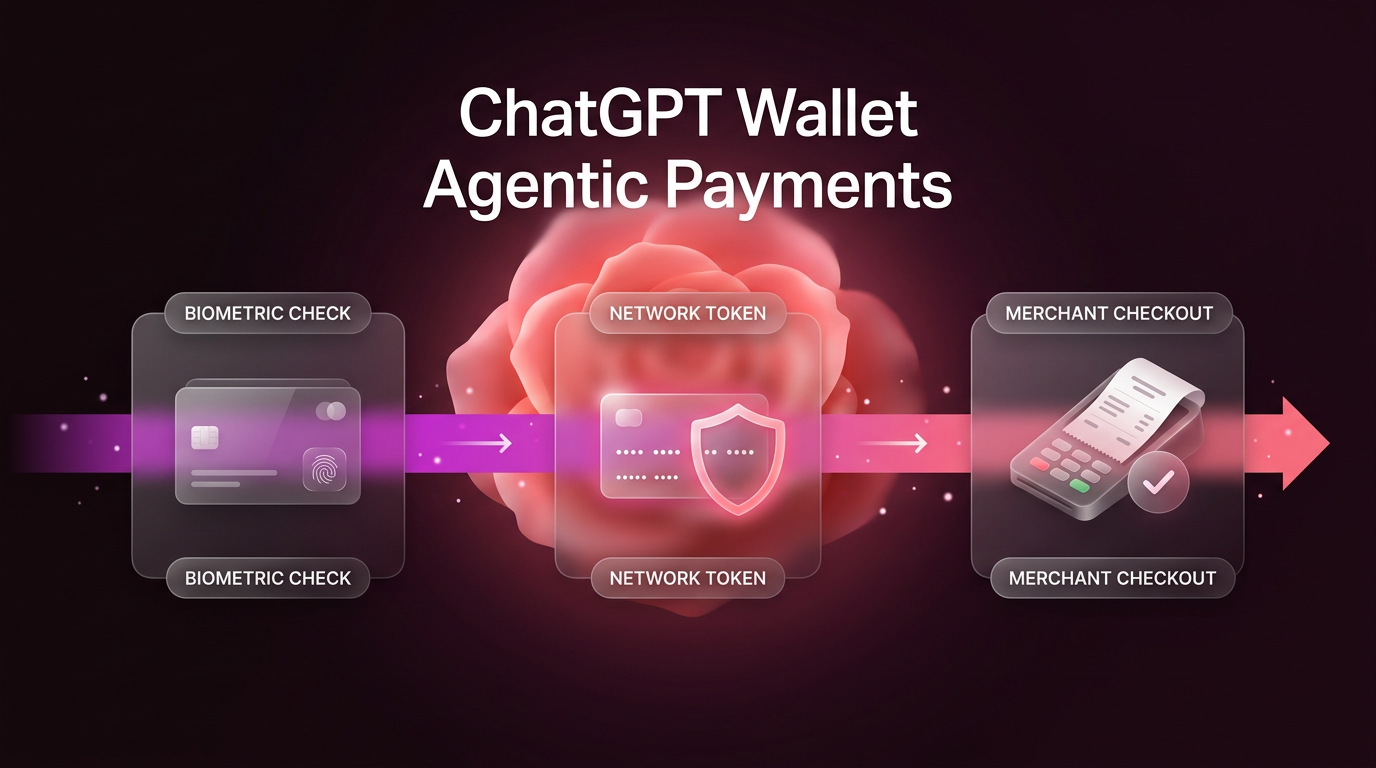
A checkout conducted through ChatGPT Wallet follows a strict authorization sequence. The assistant locates the items, calculates shipping and taxes, and prepares an order summary for review. The buyer inspects the item list, store identity, total price, and chosen card profile before granting authorization.
Every transaction requires explicit biometric verification from the buyer. Users must authenticate each order using Face ID, a fingerprint sensor, or an equivalent operating system security check. This biometric confirmation creates an auditable record showing the user explicitly authorized that exact agent purchase.
Once the biometric check succeeds, the payment network generates a dynamic payment token consisting of a surrogate 16-digit card number, a dynamic security code, and an expiration date. ChatGPT Wallet delivers this network token directly to the store checkout. The merchant charges the token through standard card gateways without ever receiving or storing the consumer’s real primary account number.
Why Agentic Commerce Matters for Buyers and Merchants
By relying on established payment networks, ChatGPT Wallet protects standard consumer benefits. Buyers maintain their standard reward points, cash back structures, and dispute rights for defective merchandise or unfulfilled deliveries. Transactions clear directly between the customer and the seller, meaning stores retain direct consumer relationships, order records, and return policies.
For online retailers, agentic commerce opens a path to capture intent at the exact moment of discovery. When consumers research products inside conversational threads, the assistant can finalize the order immediately rather than sending an outbound link that risks cart abandonment. Because the payment token behaves like an ordinary card number, sellers do not need to replace their existing payment gateways.
OpenAI noted that future iterations of ChatGPT Wallet may support broader delegation. Planned capabilities include pre-approved purchase thresholds where shoppers define category boundaries, time limits, or spending caps so an assistant can buy routine supplies without demanding manual approval for every single cart.
Preparing Merchant Systems for ChatGPT Wallet Transactions
Online stores must configure their infrastructure to welcome automated buyers. Many retail websites unintentionally block machine traffic through aggressive bot defenses or content delivery network rules. OpenAI recommends merchants implement specific technical adjustments to prevent checkout drop-offs:
- Verify business ownership in ChatGPT and supply a clean, structured product data feed showing live inventory levels and accurate pricing.
- Configure content delivery networks and security firewalls to recognize signed requests via Web Bot Auth so assistant crawlers can inspect product pages.
- Coordinate with fraud mitigation services like Forter, Riskified, Sardine, and Signifyd to ensure dynamic tokens from agent checkouts are not automatically rejected as suspicious card-not-present fraud.
- Review payment gateway configurations with providers like Adyen, Checkout.com, or Stripe to confirm network tokens process cleanly through active merchant IDs.
- Adopt WebMCP tools or dedicated plugins that permit software assistants to check SKU availability and manage cart items directly.
Merchants that adopt these recommendations ensure automated shoppers complete orders reliably without false risk flags or broken sessions.
Practical Implications for Business Infrastructure
The rollout of ChatGPT Wallet demonstrates that commercial AI use is moving rapidly from text generation into direct operational execution. For businesses investing in modern web designing, website architecture must now cater equally to human visitors and automated assistants. Catalog data, stock availability, and checkout forms require semantic clarity so machine agents interpret parameters accurately.
Security frameworks also require reassessment. Retail fraud engines often equate rapid, non-human browsing patterns with credential stuffing or scraping attacks. Because ChatGPT Wallet sends network-backed payment tokens generated through authentic biometric scans, merchants that fail to differentiate authorized agents from malicious bots will inadvertently turn away legitimate sales.
Frequently Asked Questions About ChatGPT Wallet
Does ChatGPT Wallet expose personal card details to online stores?
No. ChatGPT Wallet never shares actual card numbers with retail websites or the assistant itself. The system uses network payment tokens supplied by Visa, Mastercard, Chase, or American Express, transmitting substitute card credentials that settle against the underlying account.
Can an assistant make purchases without user permission?
Not under the current launch rules. Every transaction attempted by ChatGPT Wallet requires active biometric confirmation, such as Face ID or fingerprint scanning, immediately before the payment token generates. OpenAI plans to explore bounded autonomous spending with pre-set budgets in future releases.
Who is eligible to use ChatGPT Wallet today?
Availability is currently limited to ChatGPT Pro subscribers aged 18 and older located in the United States. Users must also hold an eligible US-issued card from participating network partners.
What This Means for Automation Architectures
In client implementations involving AI automation, payment execution has historically been a critical friction point. Automating client onboarding, software provisioning, and inventory purchasing previously required fragile custom scripts or human-in-the-loop payment handoffs. Wasif builds custom data pipelines and agentic AI systems that connect operational workflows directly to CRM records and external business tools.
Standardized payment tools like ChatGPT Wallet offer a preview of how future automated enterprise pipelines will handle verified expenditures. By moving authentication to secure network tokens, organizations will eventually be able to let workflow automations purchase software subscriptions, reserve cloud server resources, or order inventory supplies under strict budgetary controls.
Conclusion
ChatGPT Wallet represents an initial, disciplined step toward secure agentic commerce. By pairing tokenized card architecture from major payment networks with mandatory biometric verification, OpenAI addresses primary fraud and liability concerns for automated buying. For digital brands and technical teams, preparing website endpoints, security firewalls, and fraud models for ChatGPT Wallet transactions will be essential as automated shopping assistants expand into everyday commercial workflows.
If you want to prepare your business systems, APIs, and automated sales workflows for the next wave of agentic software, reach out to Wasif Ahmed to discuss building reliable infrastructure.