The latest Gemini Intelligence features are expanding across additional Android hardware and connected displays. Google announced on November 10, 2026, that its on-device artificial intelligence suite is coming to earlier flagship models and partner hardware, alongside fresh utilities for voice transcription, task execution, and system control. The details were announced on the Google blog by Karthik Thirumalai, Product Director for Android AI.
The Core Device Expansion
Gemini Intelligence initially debuted earlier in the year before rolling out during the summer across hardware such as the Pixel 11 and Samsung devices, including the Galaxy Z Fold8 Ultra, Z Fold8, Z Flip8, and the S26 series. The November release brings these capabilities to a wider set of handsets.
As part of the current Pixel Drop, users on Pixel 10, Pixel 10 Pro XL, and Pixel 10 Pro Fold gain access to the system. Motorola is also releasing its first compatible phone, the motorola signature 27, with United States pre-orders scheduled to open on November 19.
Key Gemini Intelligence Features in the Latest Update
This release pairs broader hardware availability with specific utility updates designed to handle multi-step actions across native applications. These additions focus on voice processing, cross-app logistics, custom interface generation, and operating system diagnostics.
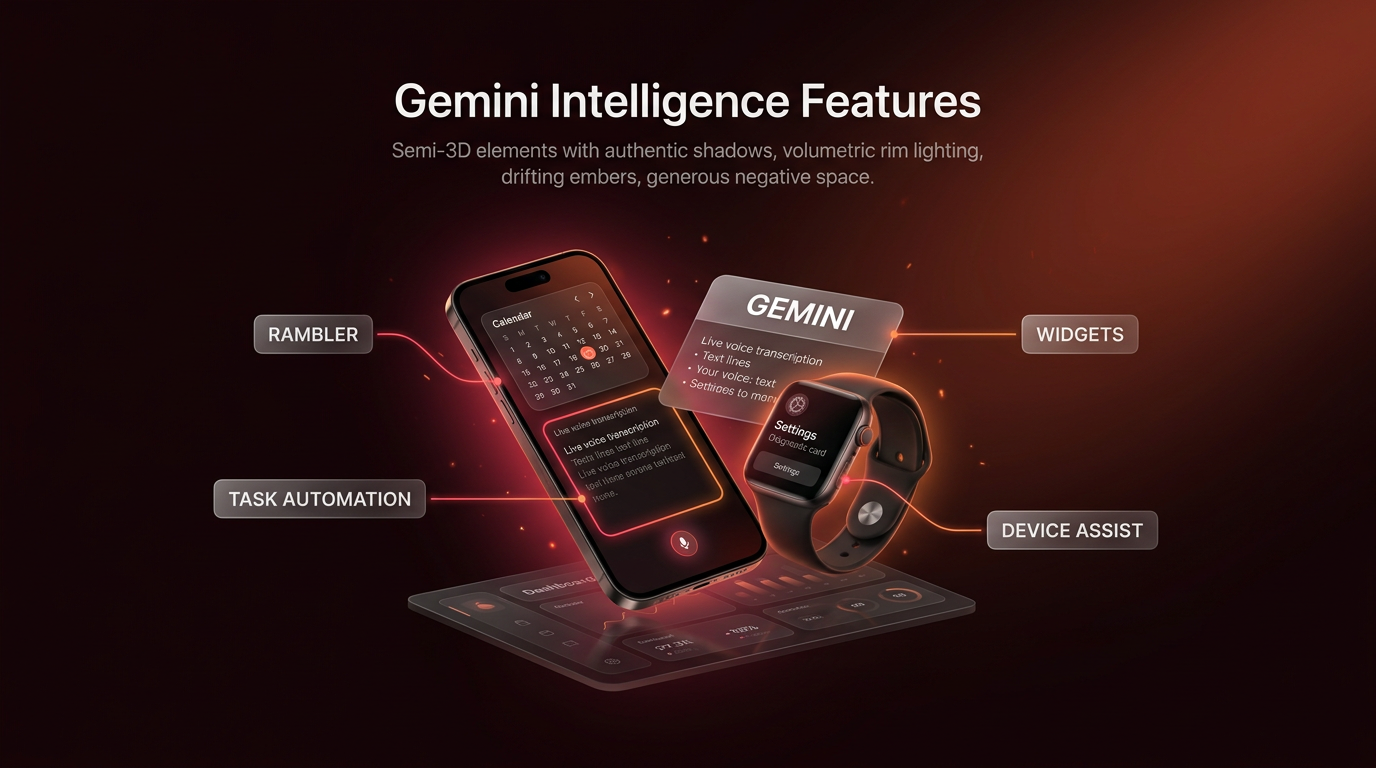
- Rambler speech conversion: Converts spoken thoughts into formatted, structured text in real time. It is now accessible on the Pixel 10 line and the motorola signature 27.
- App task automation: Allows users to direct the assistant to execute operations such as ride hailing, food ordering, and reservation scheduling across third-party software. This capability is now expanding to users in the United Kingdom, India, and Japan.
- Create My Widget: Generates custom home screen panels from simple text descriptions. It pulls live data from Gmail, Google Calendar, and Search without requiring manual programming.
- Device Assistance: Troubleshoots and adjusts phone settings through natural voice prompts, such as identifying apps with location permissions or cleaning local storage.
Each of these additions reflects an effort to convert generative models from conversational novelties into functional system utilities that run directly inside standard operating environments.
Expanding Gemini Intelligence Features Across Hardware Ecosystems
Google is extending its on-device intelligence beyond handheld phones into peripheral screens. The company launched Googlebook last month as the first laptop specifically designed around the platform. Now, proactive assistance is moving into vehicles and wearables.
For drivers using Android Auto with a compatible Pixel handset, the platform is scheduled to begin offering context-aware recommendations drawn from personal apps. For instance, if a message arrives asking about meeting logistics for an appointment, the system can parse a confirmation message inside Gmail and suggest forwarding the address with a single tap. Additionally, the Create My Widget tool is planned for release on the Pixel Watch over the coming weeks, placing customized text-prompted dashboards directly on user wrists.
Practical Implications for Businesses and Daily Workflows
For independent operators and technical teams, the steady spread of mobile assistant actions points toward tighter local app integration. When assistants can reliably take actions across food delivery, transport, or calendar apps, they reduce friction in managing daily scheduling and communication tasks.
The expansion of voice tools like Rambler also provides immediate utility for mobile professionals who dictate client notes, summaries, or quick outlines between appointments. Turning stream-of-consciousness speech into structured text on the phone saves time previously spent cleaning up rough transcripts. Combined with tools like Device Assistance, users spend less time navigating nested Android settings menus to adjust security permissions or clear storage caches.
Technical Boundaries and Regional Availability
While the hardware list is growing, availability remains segmented by device generation and territory. Task automation for ordering and rides is currently rolling out in the United Kingdom, India, and Japan, but remains subject to regional service agreements and language support. Similarly, Create My Widget and the Pixel Watch integration are marked as rolling out over coming weeks rather than being fully accessible to all users on day one.
Because these utilities interface directly with private data sources such as Gmail inboxes and calendar schedules, organizations deploying managed devices will need to observe how permission boundaries behave. System administrators should verify whether workplace profiles restrict automated data access across enterprise email repositories.
Frequently Asked Questions
What phones support the new Gemini Intelligence update?
The newest rollout adds support for the Pixel 10, Pixel 10 Pro XL, Pixel 10 Pro Fold, and the motorola signature 27. These join earlier devices such as the Pixel 11, Samsung Galaxy S26 series, and Samsung Galaxy Z Fold8 and Flip8 models.
How does the Create My Widget tool work?
Users enter a brief text prompt explaining what information they want to track on their screen. The system then queries relevant data from Google Calendar, Search, and Gmail to build and update the widget automatically without code.
Where are the new task automation capabilities expanding?
The task automation features for hailing transport, reserving tables, and ordering meals are expanding into the United Kingdom, India, and Japan across supported Android handsets.
Where this fits in automation workflows
Wasif builds custom business infrastructure, connecting cloud platforms through AI automation and structured Agentic AI Systems & AI Workforce tools. Mobile features like natural language widget creation and automated action triggers show how consumer tools are adopting the same intent-driven principles that modern backend workflows rely on. When consumer platforms normalize cross-app actions, business clients increasingly expect their back-office systems and mobile communications to operate with the same speed.
Conclusion
This update confirms that mobile operating systems are moving toward active task execution rather than simple conversational chat. With broader hardware availability and expanded regional access, Gemini Intelligence features continue to transition from experimental software into practical, everyday operating tools.
If you want to integrate streamlined automated systems into your business operations, reach out to Wasif Ahmed to discuss your setup.