Microsoft Clarity has added branded query segmentation to its AI Citations dashboard. As announced on the Microsoft Clarity blog, the update allows site owners to separate queries referencing a brand directly from generic queries used by AI engines to answer user prompts. Understanding these distinct traffic sources helps site owners evaluate whether AI visibility stems from existing brand recognition or broader topic discovery.
Key Changes Introduced in the Dashboard
The updated dashboard includes three main functional additions designed to categorize citation sources more clearly:
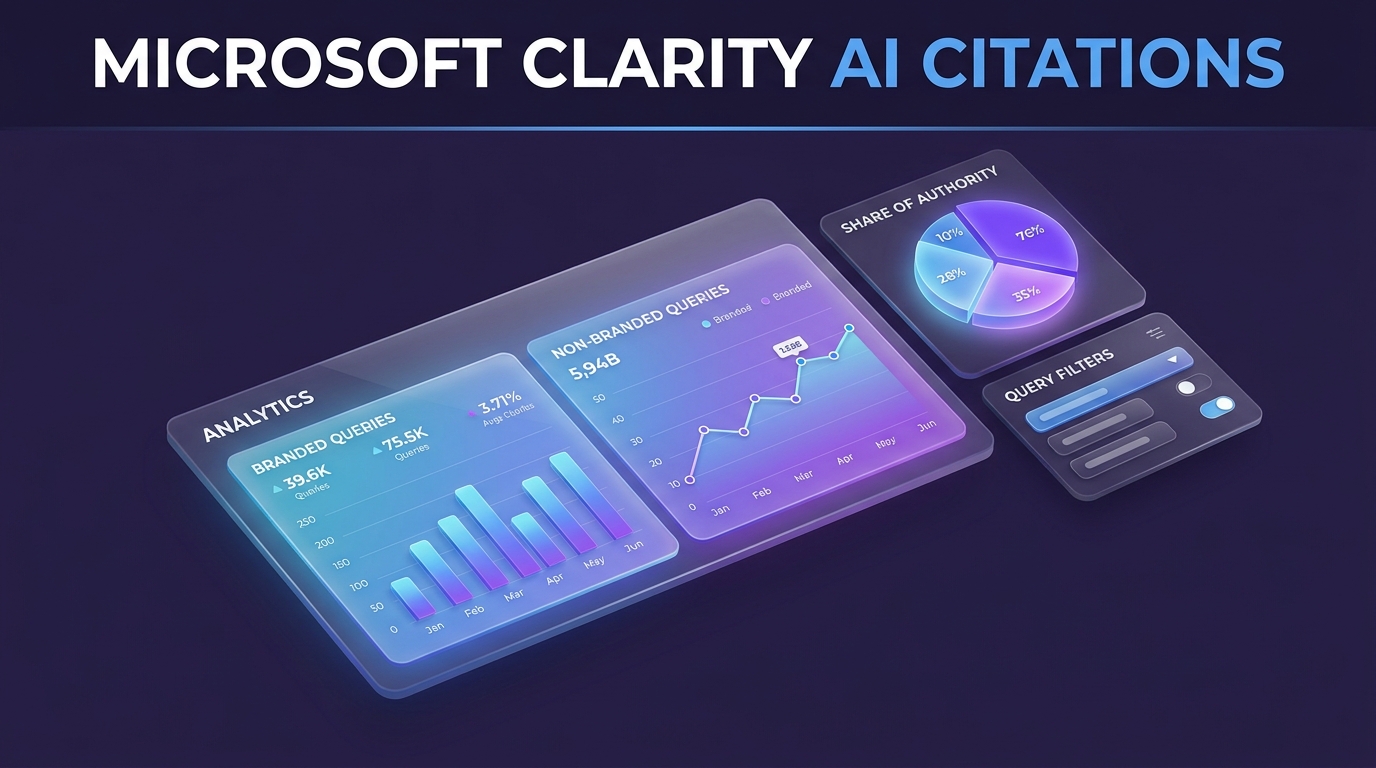
- Branded labels: Individual search phrases inside the queries view now display explicit labels when they reference a brand directly.
- Share of Authority breakdown: The Share of Authority card divides visibility scores into branded versus non-branded queries to show where site authority is concentrated.
- Query filters: New filter controls allow users to isolate branded or non-branded data across the entire AI Citations interface.
These features are now live in the AI Visibility dashboard within the Microsoft Clarity platform.
Why Separating Branded and Generic AI Queries Matters
AI search models pull supporting information from distinct types of lookup phrases. When a user asks an AI tool about a specific product or company, the system performs a branded lookup. Conversely, when a user asks a general question about an industry or product category, the system runs a non-branded lookup to generate context.
Without query segmentation, analytics data combines these two sources into a single metric. Combining them can make it difficult to determine whether site traffic is growing because of direct brand awareness or general content rankings. The new segmentation tools clarify whether an organization is capturing market share during broad discovery phases or simply maintaining visibility among users who already know the brand name.
Practical Implications for Web Strategy
Evaluating Microsoft Clarity AI citations through this segmented lens gives site managers clearer directional feedback. Organizations can review how well their published information supports AI answers across both direct searches and general topic research.
For example, a high volume of branded AI citations indicates that users specifically ask AI engines about a company’s offerings. A high volume of non-branded citations indicates that an AI system selects the site’s pages as grounding material for general category questions. Identifying these patterns helps digital teams adjust their publishing efforts based on whether they need to build overall brand awareness or capture wider informational demand.
Site owners can also combine these findings with broader platform setups. Teams implementing automated reporting and workflow pipelines through tools like AI automation or CRM environments like Go High Level can monitor citation shifts alongside lead generation channels.
Where This Fits in Client Builds
Wasif builds custom AI automation workflows, CRM systems, and business websites that incorporate analytics monitoring into client operations. When deploying sites and reporting systems, Wasif configures performance tracking so site owners receive structured data on user acquisition and technical site engagement.
Adding source-level tracking to technical builds ensures that marketing strategies rely on clear operational metrics rather than aggregate estimates. Clear visibility metrics make it easier to refine content structures and technical site assets over time.
If you want to refine your technical architecture or analytics tracking, feel free to reach out to Wasif.