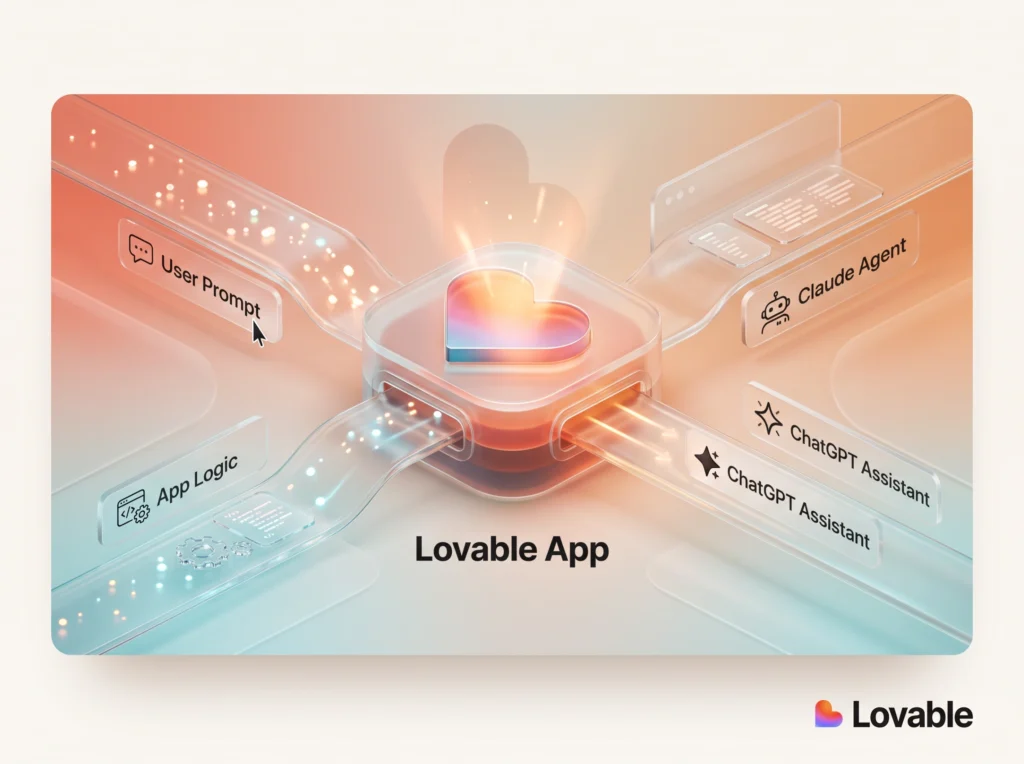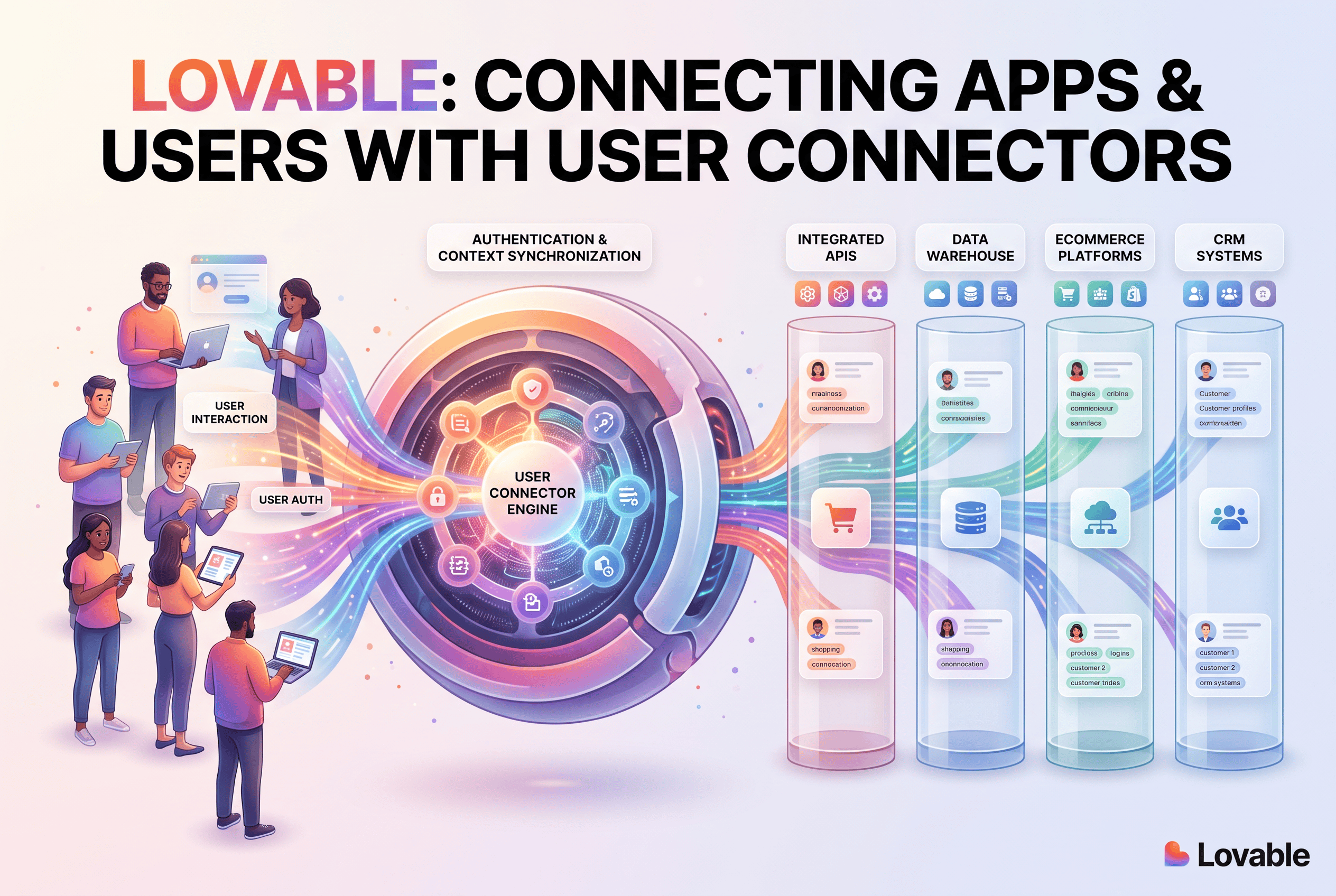
On July 29, 2026, web application builder Lovable launched an update to its data integration capabilities. The introduction of Lovable app user connectors allows applications built on the platform to run directly on end users’ connected accounts and live credentials, as announced on the Lovable blog.
Previously, integrations in Lovable apps relied primarily on the builder’s own database connections or workspace-level tokens. This update changes the architecture by enabling each individual end user to sign into their own third-party tools within a single shared application.
As a result, software creators can now build internal tools for teams or external software products where every user interacts strictly with their own permissioned data.
Key Features of Lovable App User Connectors
The update changes how applications handle third-party service connections by shifting authentication from the developer level to the end user. When a user opens an app built with Lovable, they can authenticate their personal or company accounts directly.
This capability opens up several core features for builders and enterprise teams:
- User-Level OAuth Flows: End users authenticate using standard login screens from providers like Google Workspace, Microsoft, Slack, Salesforce, or HubSpot.
- Workspace-Wide Configuration: App administrators register client credentials once at the workspace level, eliminating repetitive setup for individual apps.
- Preserved Authorization Levels: The application automatically inherits the existing access permissions of the signed-in user without granting broader administrative rights.
- Automated Credential Management: Token issuance, security encryption, and session refresh cycles are handled by the platform infrastructure automatically.
For example, a sales team can deploy a single custom deal review dashboard built in Lovable. When a sales manager logs in, the app displays their assigned HubSpot pipelines and recent call transcripts, while a regional representative viewing the exact same app only sees their own assigned accounts.
Security and Permission Framework
Data security is a primary concern when handling multi-tenant access to sensitive business tools. The architecture for Lovable app user connectors addresses this by using an isolated connector gateway.
User credentials and OAuth tokens are stored securely inside the gateway environment. They are attached to outgoing API requests on the backend and are never exposed directly to the client browser or stored inside the application’s local frontend state.
Furthermore, the system does not create an independent permissions layer that administrators must configure manually. If an employee lacks access to a specific record in Google Workspace or a table in Snowflake, the published app will fail to retrieve that record, maintaining corporate access controls automatically.
Setting up these connections requires registering an OAuth application with the target service platform. Internal organizational tools usually bypass complex app store reviews, while public commercial applications undergo standard vendor verification before rollout.
Practical Implications for Builders and Businesses
This architectural shift expands what can be constructed without building custom authentication servers or token management infrastructure. Builders can create targeted tools on top of complex software stacks without writing heavy backend authorization code.
Organizations can now extend their existing software investments into specialized internal interfaces. For instance, recruitment teams can pair their applicant tracking software with candidate evaluation tools, while support teams can consolidate ticket data from messaging platforms and internal CRMs into unified views.
This capability also lowers the barrier to deploying specialized software products. Founders building niche platforms can utilize Lovable app user connectors to let customers bring their own data, turning custom prompts into multi-tenant web applications.
These capabilities integrate directly with broader AI automation initiatives, allowing intelligent agents to execute actions inside user-specific environments under verified user authority.
What This Changes for Client Builds
When evaluating platform updates for production environments, Wasif focuses on maintainability, data safety, and structural efficiency. Eliminating custom OAuth token infrastructure drastically reduces the complexity of building multi-user business tools.
In client projects, integrating external platforms with core operational hubs like Go High Level often requires careful token handling across multiple client sub-accounts. Standardized end-user authentication reduces points of failure during API interactions.
By leveraging native user permissions, client builds can achieve enterprise-grade access control without adding heavy database overhead. This ensures custom applications remain scalable, secure, and simple to maintain over time.
Grounded Outlook on AI Application Development
The release of end-user data connections marks an important step toward mature, context-aware web applications. Software is moving away from generic static interfaces toward dynamic applications deeply connected to personal and organizational data stores.
As AI app builders continue to add secure backend features, the speed at which functional, secure software can be deployed will accelerate. Businesses that structure their data pipelines and access permissions cleanly today will be best positioned to take advantage of these tools.
If you want to build custom automated tools or connect your business systems securely, get in touch with Wasif.