When organizations try to train employees on artificial intelligence, they often focus entirely on prompt formulas. Anthropic introduced Claude Academy to shift that focus toward human agency, task delegation, and durable operational habits rather than temporary syntax tricks.
As large language models improve, brittle techniques like manually specifying audience context become obsolete. The educational model presented by Anthropic outlines how individuals and leadership teams can build lasting judgment around automated tools.
The Core Philosophy Behind Claude Academy
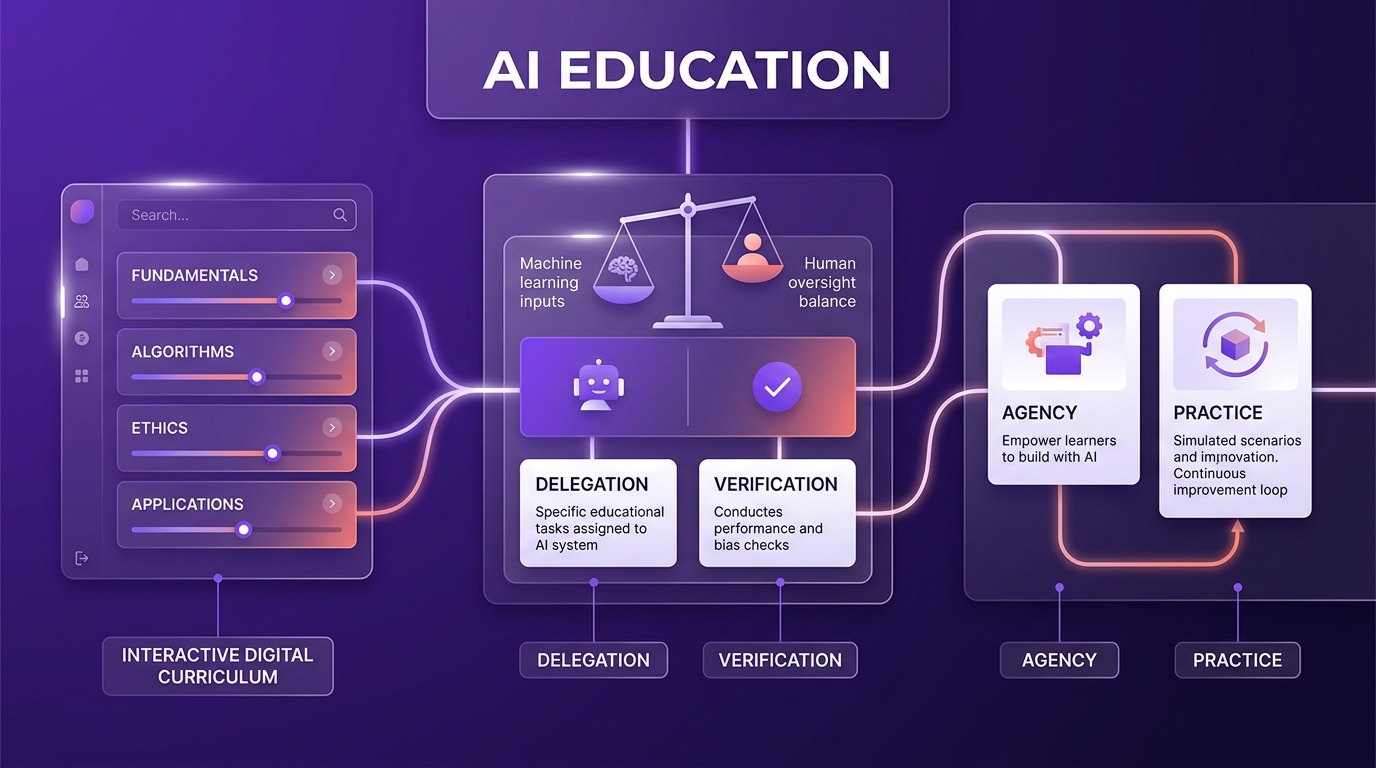
The curriculum inside Claude Academy treats artificial intelligence as an aid to expand human competence rather than a replacement for critical thinking. Anthropic states that AI instruction must increase human agency and help people address practical workplace problems without letting foundational skills deteriorate.
A central tenet of the platform is teaching users when not to automate. By encouraging learners to reflect on which parts of an assignment require human nuance and which parts can be delegated, the framework prevents passive over-reliance on model outputs.
Shifting from Prompt Tricks to Durable Mindsets
Prompt engineering guides often become outdated with every major model release. Anthropic notes that newer models actively ask clarifying questions when context is missing, reducing the need for rigid prompt templates. Because tools evolve rapidly, the curriculum centers on core operational mindsets instead of static behaviors.
- Proportional verification: Users learn to calibrate their review process based on the operational stakes of the task. Routine summaries require light oversight, whereas legal drafts or sensitive data extractions demand strict verification.
- Anticipating model progression: The assumption that current tools represent the baseline capability encourages builders to design flexible workflows that absorb future intelligence upgrades.
- Ethical transparency: The framework teaches learners to explicitly disclose how automated systems contributed to analyses, reports, or creative assets before sharing them with stakeholders.
- Preventing skill atrophy: Intentional delegation ensures that team members maintain core competencies even while offloading repetitive drafting tasks.
How Anthropic Trains Internal Teams
The public curriculum draws directly from how Anthropic educates its own staff. According to the company, internal training begins on day one with a structured 4D AI Fluency Framework, covering agent knowledge boundaries and the rate of technical progression.
Anthropic pairs formal onboarding with continuous education programs known as ever-boarding. Internally, employees use tools such as Claude Tag to find company information, alongside Claude-moderated Slack channels for IT, legal, and benefits questions. The goal is to build autonomous teams that understand model limitations, spot typical generation errors, and collaborate with automated agents safely.
Balancing Automation and Human Responsibility
Adopting an educational framework like this reveals a broader operational reality: software capability alone does not guarantee productivity. When companies hand automated tools to untrained staff without clear verification rules, error rates and hallucinations can slip into client-facing deliverables.
By treating task delegation as a deliberate decision, organizations create clear boundaries. Routine extraction and initial drafting can be offloaded, while strategic evaluation, validation, and contextual nuance remain firmly in human hands. Teams building advanced agentic AI systems benefit directly from this structured approach to human-agent collaboration.
FAQs
What is Claude Academy?
Claude Academy is an educational initiative by Anthropic designed to teach individuals and teams how to work with artificial intelligence safely and effectively. It provides problem-focused tutorials, structured courses, and learning paths accessible via a dedicated learning portal.
How does Anthropic’s training differ from traditional prompt engineering courses?
Traditional courses focus primarily on writing specific prompt formulas. Anthropic focuses on durable operational mindsets, such as proportional verification, deciding when to delegate tasks, and understanding model error patterns across different workplace scenarios.
Who is Claude Academy designed for?
Anthropic created the platform for both individual knowledge workers and organizational leaders. It covers foundational AI fluency for day-to-day productivity as well as broader team governance and ethical disclosure practices.
Applying AI Frameworks to Real Client Builds
In client projects, Wasif applies these exact delegation principles when designing AI automation workflows. Setting up automations requires knowing where deterministic logic should handle data and where autonomous agents need strict validation boundaries. Establishing proportional oversight prevents automated processes from failing silently when handling sensitive customer interactions.
If you want to implement structured, reliable automated systems inside your business, reach out to Wasif Ahmed to discuss your project.