Microsoft has released three major capabilities inside Microsoft Clarity designed to monitor automated bot visitors, manage product discovery in large language models, and query site behavioral data. The central addition, agentic analytics, gives website administrators direct reporting on how autonomous software agents browse catalogs, complete forms, and handle checkout flows. The company announced the global rollout on the Microsoft Clarity blog, noting that these additions help businesses manage an internet environment where both human visitors and autonomous systems interact with web properties simultaneously.
According to telemetry published by the platform, weekly sessions initiated by autonomous software agents nearly doubled across a three-week observation window, reaching almost two million recorded visits. These visits originated from agents such as Muse and Dots that search, book appointments, and fill out forms on behalf of human users. Because traditional analytics platforms classify software agents either as standard human traffic or as simple scraper bots, site managers often lack visibility into where these automated workflows succeed or fail.
Three Key Additions to the Clarity Platform
The platform update introduces three distinct tools that address how modern internet users find and complete actions on websites:
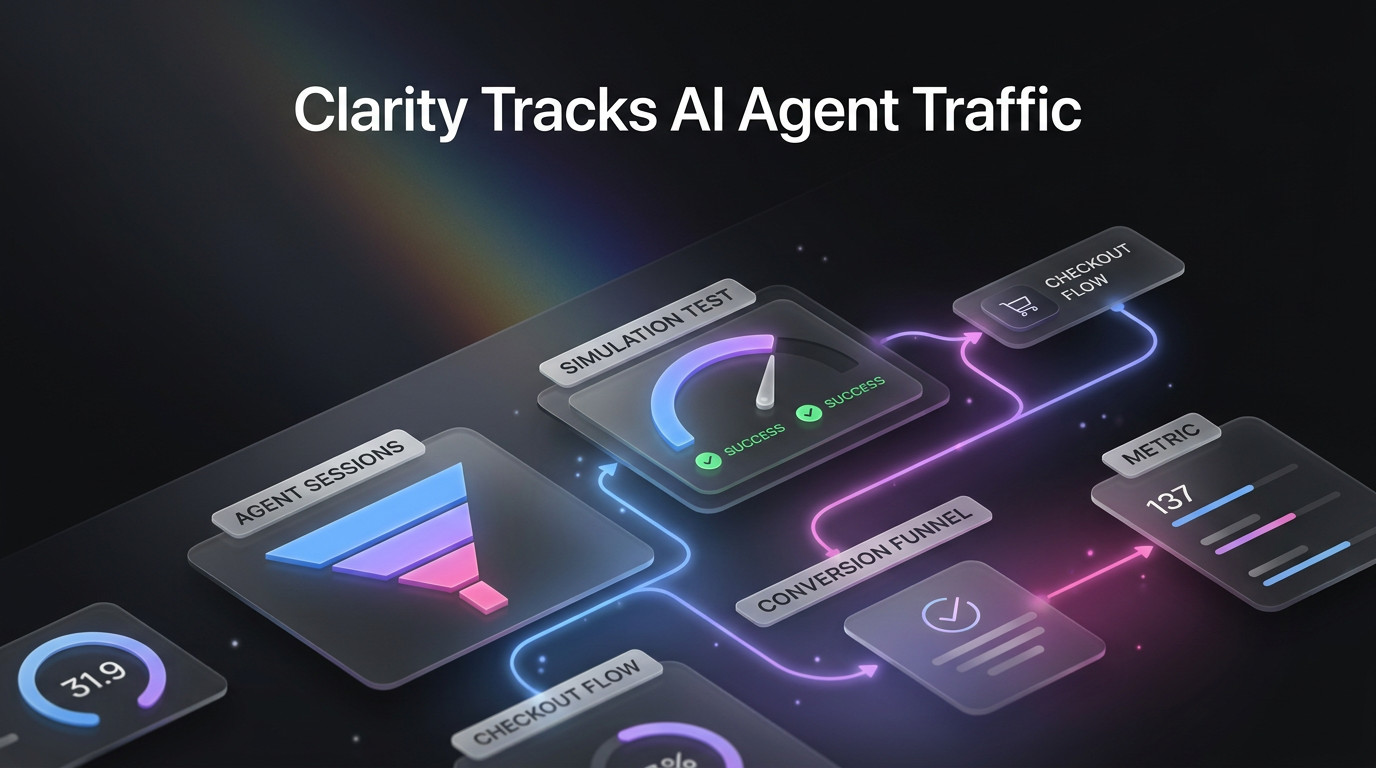
- Agentic Analytics: A dedicated reporting space and simulation engine that tracks supported agent operators and audits task completion across critical funnels.
- Brand Agents: A catalog integration that distributes merchant products across Microsoft Copilot, Bing, and MSN, while offering an on-site virtual assistant that connects directly to business scheduling software.
- Ask Clarity: An artificial intelligence query interface that reviews session recordings and behavioral metrics to answer specific diagnostic questions about user drop-off.
Microsoft confirmed that Clarity remains completely free for users. The agent reporting tools and Brand Agents have rolled out globally, while Ask Clarity is currently available in a closed beta for retail businesses.
How Agentic Analytics Evaluates Automated Traffic
Most modern websites are engineered around human behavioral patterns, relying on visual cues, modal windows, and interactive scripts. When an automated buyer or booking assistant arrives at a site, unexpected popups, complex form validation, or script errors can cause the session to abandon without alerting the store owner. The introduction of agentic analytics addresses this problem through passive session monitoring and active workflow simulations.
The Agent Activity Dashboard
The new Agent Activity dashboard tracks automated visitor volume over time and isolates which specific agents visit the domain. The system currently detects agent operators from Google, OpenAI, and Anthropic. Within the dashboard, administrators can review granular actions completed by these agents, including site searches, file downloads, account logins, appointment requests, form submissions, and completed checkout sequences. This level of classification helps development teams determine whether automated buyers are dropping off during transaction steps.
Simulating Tasks with Agentic Analytics
Beyond tracking live visits, the agentic analytics feature set includes simulation assessments. This allows operators to test how effectively an autonomous program can navigate complex paths before real customer journeys fail. The simulation tool measures whether a predefined task reaches completion, how many discrete interactions were required, how much total time elapsed, and where interface elements caused friction. Microsoft stated that simulation assessments currently focus on commerce and travel user journeys, with plans to expand into additional industry scenarios over time.
Brand Agents for Discovery and Local Scheduling
Alongside passive measurement, Microsoft launched Brand Agents to assist businesses in distributing product data to generative search engines and capturing direct bookings. The feature started as an on-site shopping assistant grounded in store policies, catalog feeds, and brand guidelines. The update expands that capability directly into Microsoft consumer channels.
For eligible merchants running Shopify or WooCommerce, Brand Agents can expose live product catalogs directly inside Microsoft Copilot, Bing search results, and MSN experiences. When shoppers ask generative interfaces for gift ideas or specific product recommendations, items from participating stores can appear inside the recommendations. Shoppers then click through directly to the merchant domain to complete their transactions without requiring separate manual data uploads.
For local service companies, Brand Agents acts as an interactive front-desk intake system on WordPress sites. The software answers visitor inquiries regarding available services and connects directly to existing calendar and CRM infrastructure. Supported scheduling and management platforms include Square, Jobber, HubSpot, Calendly, Housecall Pro, and Salesforce. This allows service providers to capture leads and confirm appointments outside normal operational hours.
Ask Clarity and Behavioral Session Analysis
The third component of the update is Ask Clarity, a conversational analysis feature designed to process complex behavioral data. As website traffic diversifies across search, social networks, advertising, and automated assistants, identifying the root cause of conversion problems requires reviewing vast amounts of raw data. Ask Clarity attempts to automate this diagnostic process by evaluating visitor sessions much like a human data analyst.
Users can submit natural language questions regarding site performance, such as why visitors from specific geographical territories are failing to convert. The software evaluates session heatmaps, conversion funnels, and click records to identify underlying causes, such as missing shipping methods or untranslated content. Critically, the tool pairs each observation with direct links to the underlying session recordings so operators can inspect the evidence directly.
In an early access survey conducted by Microsoft with 16 retail participants, 88 percent reported uncovering new operational facts about their websites. Kelly Wellman, eCommerce Manager at Pela Case, noted that the tool helped identify where shoppers were dropping off during a product personalization launch, discovering that 80.2 percent of pageviews on a PowerBank landing page concluded without an onward click.
Frequently Asked Questions About Agentic Analytics
What is agentic analytics in Microsoft Clarity?
In Microsoft Clarity, agentic analytics refers to a reporting dashboard and simulation toolkit that monitors autonomous AI agents visiting a website. It tracks specific actions like form submissions and checkout attempts while offering simulations to verify that automated systems can successfully complete purchases.
Which autonomous agents does Clarity currently support?
The platform currently identifies agent operators from Google, OpenAI, and Anthropic. Clarity detects activities carried out by these systems, including visits from specialized agents such as Muse or Dots.
Is Microsoft Clarity charging for these new tracking features?
No, Microsoft Clarity remains a free platform for all users. The Agent Activity dashboard and Brand Agents features are free to set up, while Ask Clarity remains in a closed retail beta waitlist without added subscription fees.
Deploying Automated Monitoring in Web Infrastructure
As automated assistants perform more routine research and purchasing tasks, maintaining clean digital infrastructure becomes a necessity for online businesses. Wasif builds web designing architectures, AI automation workflows, and agentic AI systems that bridge transactional websites with customer management platforms. Ensuring that booking forms, checkout funnels, and CRM triggers function reliably for both human users and automated assistants prevents lost revenue opportunities.
Understanding how autonomous buyers interact with your digital store will only grow in importance as generative tools take on direct transactional roles. Adopting agentic analytics allows businesses to measure automated visits accurately, fix broken workflows, and protect conversion rates across every digital channel.
To configure automated tracking, evaluate your web funnels, or integrate your CRM systems with modern AI assistants, reach out to Wasif Ahmed.