Many organizations start exploring artificial intelligence by testing isolated prompts in conversational tools. Moving from individual experimentations to a comprehensive AI business strategy requires shifting focus toward repeatable processes, integrated systems, and clear business outcomes.
A structured approach helps teams identify where artificial intelligence adds actual operational value rather than creating unnecessary complexity. As discussed on the Make.com blog, establishing a functional strategy involves mapping existing operational bottlenecks and selecting tools that connect cleanly with core software stacks.
Core Pillars of an Effective AI Business Strategy
Building a durable strategy requires evaluating operational readiness across several key areas before deploying automated scenarios. Organizations that skip this assessment often end up with disconnected tools that demand frequent manual intervention.
- Process Selection: Identify high-volume, rules-based tasks that contain structured or semi-structured data, such as routing incoming leads or summarizing support tickets.
- Data Infrastructure: Ensure clean data inputs across database management systems, cloud storage, and client portals.
- System Integration: Select platform connectors that support secure API access and real-time webhook triggers.
- Governance and Oversight: Establish human-in-the-loop validation steps for high-stakes business decisions or customer communications.
Aligning Automation Tools with Operational Goals
A practical AI business strategy focuses on connecting intelligence layers directly to daily software tools. Rather than treating artificial intelligence as a standalone destination, effective architectures embed language models directly inside routine data flows.
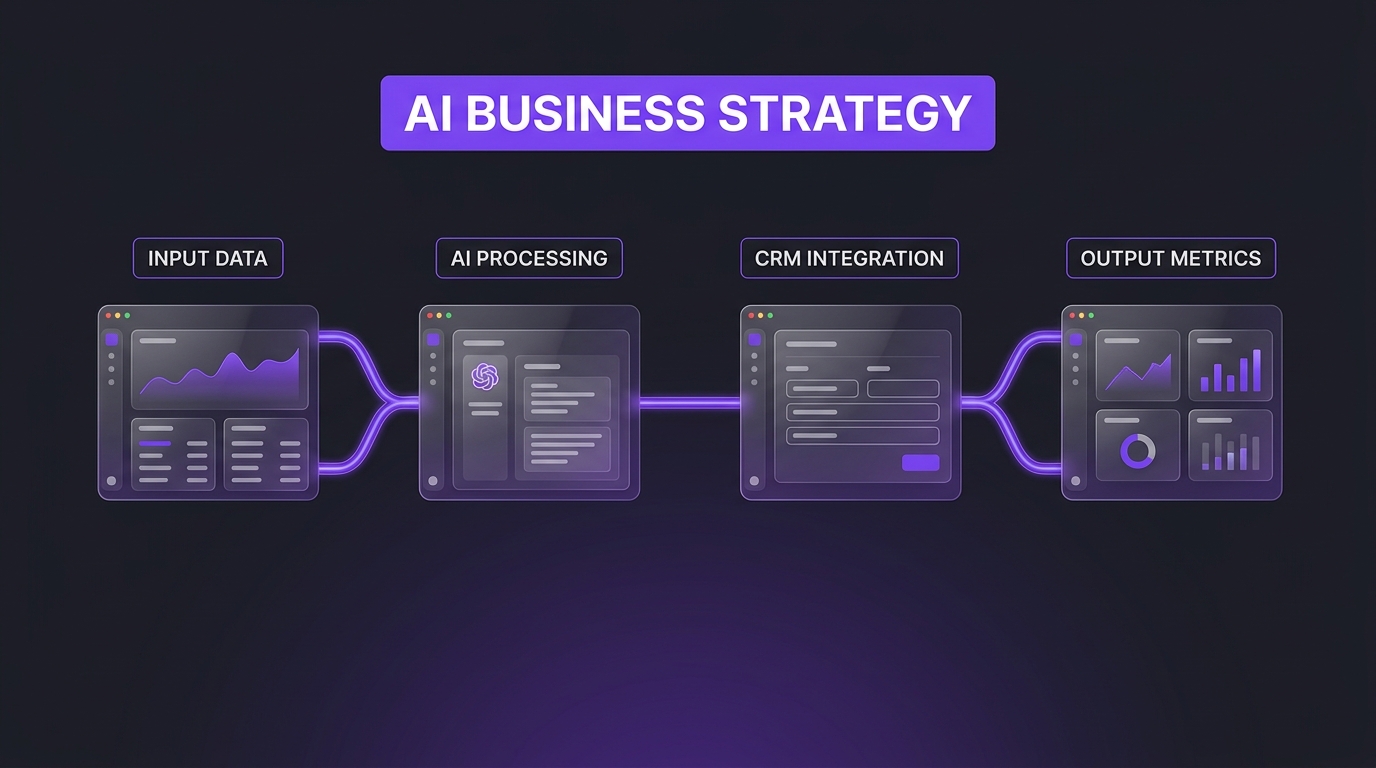
For instance, an incoming customer inquiry can trigger an automated scenario inside Make.com. The scenario parses the text using a language model, extracts key intent attributes, updates custom fields in a CRM platform like Go High Level, and alerts the appropriate account manager in Slack. This integration removes manual copying while maintaining data consistency across systems.
When planning these connections, teams should map the exact inputs and outputs required at each stage. Defining expected data schemas early prevents formatting errors and keeps automated pipelines running reliably.
Addressing Common Implementation Challenges
Deploying AI automation across an enterprise presents specific technical and operational risks. Recognizing these friction points early helps teams maintain system stability and maintain data accuracy.
One frequent mistake is attempting to automate complex, unstructured decisions without human review. Language models work best when constrained to clear tasks, such as categorization, extraction, or initial draft generation. Critical approvals, financial transfers, or sensitive client notifications should retain human oversight.
Another common issue is vendor sprawl. Adding single-purpose tools for every small task creates security risks and fragmented reporting. Standardizing on versatile integration platforms allows organizations to manage external API connections, retry logic, and error handling from a single dashboard.
FAQs
What is the first step in creating an AI business strategy?
The first step is auditing existing business operations to identify repetitive, data-heavy tasks. Prioritize processes where manual data entry or text processing creates operational bottlenecks. Once these areas are documented, evaluate which tasks benefit from automated processing versus human review.
How does AI automation differ from traditional rule-based automation?
Traditional automation relies strictly on fixed conditional logic, moving rigid data from point A to point B. AI automation incorporates machine learning models to parse unstructured data, such as incoming emails or documents, before executing downstream actions. This capability allows workflows to handle variable inputs without breaking.
Which software tools are essential for implementing an AI strategy?
A standard stack includes an integration platform like Make.com, a central database or CRM system, and external API access to language models. Connecting these layers allows business data to flow automatically between applications while leveraging processing nodes where needed.
Where This Fits in Real Projects
Building functional automation systems requires coordinating multiple tools, webhooks, and data models into reliable routines. Wasif builds custom workflows that connect visual platforms like Make.com with CRMs, administrative databases, and communication channels.
Through systematic scenario design, Wasif helps businesses implement an end-to-end AI automation architecture that reduces administrative workload while keeping data synchronized across core software platforms.
If you want to align your software stack with a structured operational plan, reach out through Wasif Ahmed’s contact page.