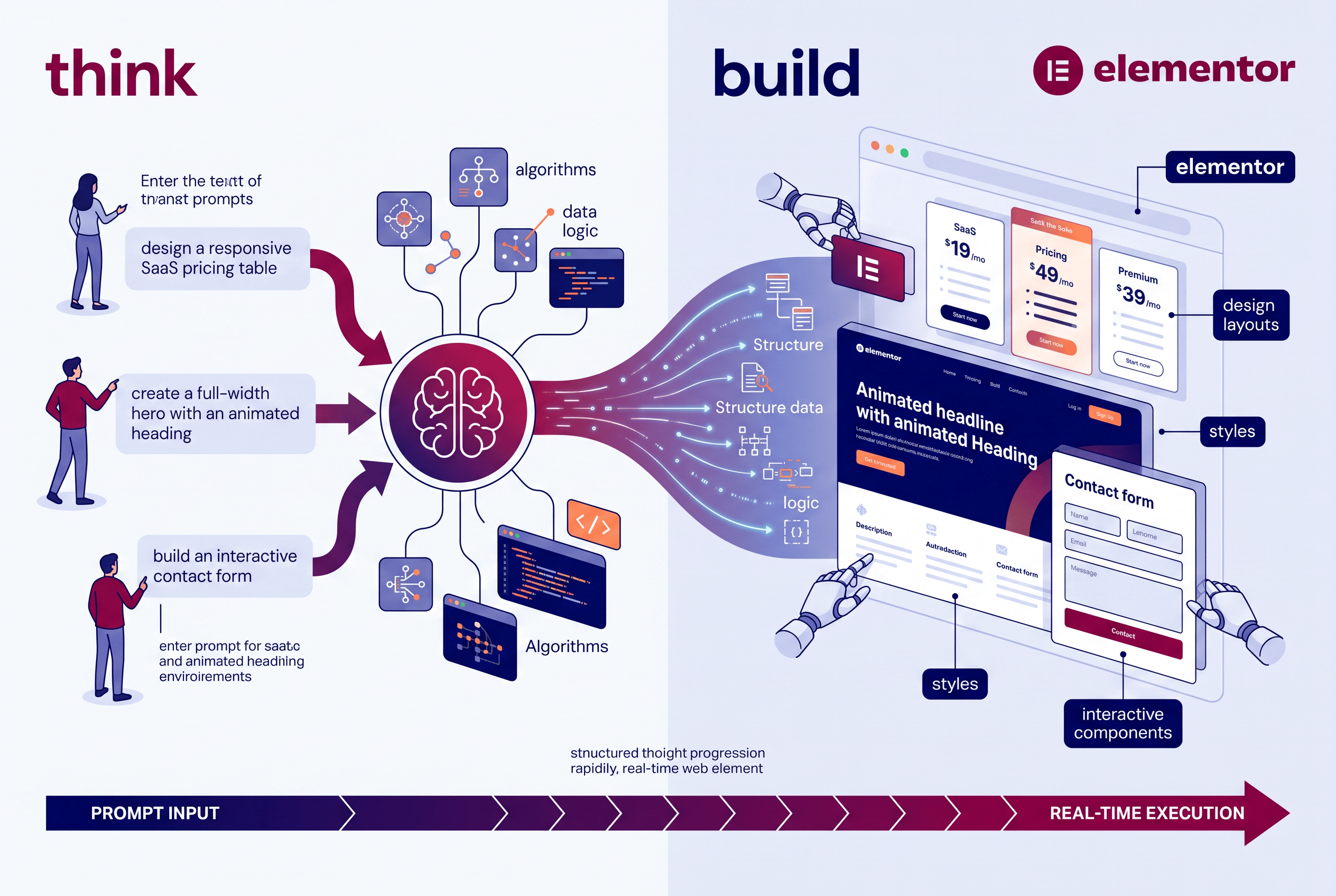
In July 2026, Elementor expanded its AI capabilities by introducing prompt-based page, design system, and component creation within its page builder. The updated Elementor Angie AI agent allows creators to generate fully structured, editable web pages directly from text descriptions or visual reference files.
Rather than producing static page templates or exporting external layouts, the updated assistant generates native containers and controls inside the WordPress editor. This release shifts how designers handle wireframing, component styling, and structural development during early client build stages.
Key Features Included in the Elementor Angie AI Update
The core update centers on converting natural language instructions into functional site layouts. Builders can supply details about brand guidelines, color palettes, and audience goals, which the system uses to assemble complete page layouts.
- Full Page Generation: Creates layouts with hero sections, content blocks, and call-to-action areas using active site styling.
- Design System Extraction: Generates color and typography systems from uploaded screenshots or text specifications.
- Atomic Forms and Loops: Builds multi-field contact forms and dynamic post query loops directly from conversational prompts.
- Angie Code Generation: Writes custom PHP snippets, CSS, JavaScript, and custom Elementor widgets in a protected test environment.
- Plan Mode: Asks clarifying questions before executing complex layout instructions to ensure accuracy.
For dynamic content and form elements, the features require an active Elementor Pro license and the Atomic Editor enabled in WordPress settings. As announced on the Elementor blog, all assets generated by the code module can be tested in isolation before going live on production environments.
Why Native Structure Matters for Business Owners and Builders
A common challenge with AI layout tools has been code quality and editability. External generators often produce rigid code or nested containers that break site maintenance standards. Because Elementor Angie AI builds natively inside the editor visual tree, every container, heading, and image widget remains standard and fully adjustable.
This native approach protects overall site health. Instead of installing extra third-party add-ons to handle specialized forms or layout variations, teams can generate targeted sections using existing core elements. Reducing plugin reliance helps maintain clean database query patterns and prevents site bloat.
For agencies managing modern web designing projects, this structure accelerates initial client mockups while preserving established site architecture standards.
Practical Implications for WordPress Site Workflows
Starting new page builds typically consumes substantial time during initial layout setup and typography pairing. By feeding a reference screenshot into the design system generator, site builders can establish global fonts and color variables before placing a single widget.
Consider a practical scenario: a service business needs a custom quote request page with conditional input fields and a three-column blog feed. With this update, the builder can prompt the assistant to generate an Atomic Form alongside a post archive loop. The system automatically applies global design tokens to both elements, maintaining brand consistency across the entire page.
Furthermore, because every generated variation saves to the native revision history, teams retain complete rollback control. If a prompt yields an unexpected structure, reversing changes takes a single click in the editor panel.
What This Changes for Client Builds
In client implementations, speed during the initial visual draft phase determines project momentum. Wasif uses structured AI workflows to skip redundant wireframing steps while preserving precise code quality. By establishing site tokens first and generating layouts second, client builds remain scalable rather than fragile.
Integrating intelligent assistants directly into site building environments complements broader AI automation workflows. Instead of spending hours setting up routine landing pages, builders can focus on complex backend integrations, database connections, and business logic.
Upcoming Features on the Elementor Roadmap
Elementor outlined several planned capabilities currently in development for future releases. These upcoming additions aim to expand how builders interact with generated content after initial creation.
Planned features include conversational page editing, allowing users to tweak layouts through follow-up prompts instead of manual dragging. The team is also working on automatic spacing optimizations, expanded Pro widget support, and full theme part generation for site-wide headers and footers.
If you want to build clean WordPress websites or streamline your development workflows, feel free to reach out to Wasif.