OpenAI has released dedicated educational materials and guidance focused on deploying ChatGPT at work, detailing how organizations can train staff, build repeatable prompting practices, and integrate technical tools into daily tasks. As announced on OpenAI’s index, the framework offers structured learning paths designed to lower technical barriers during company-wide AI onboarding.
Key Frameworks for Organizational AI Adoption
The updated resources outline concrete steps for moving from individual experimentation to team-wide adoption. OpenAI structures the learning path around practical utility, offering guidance tailored to different technical levels within a company.
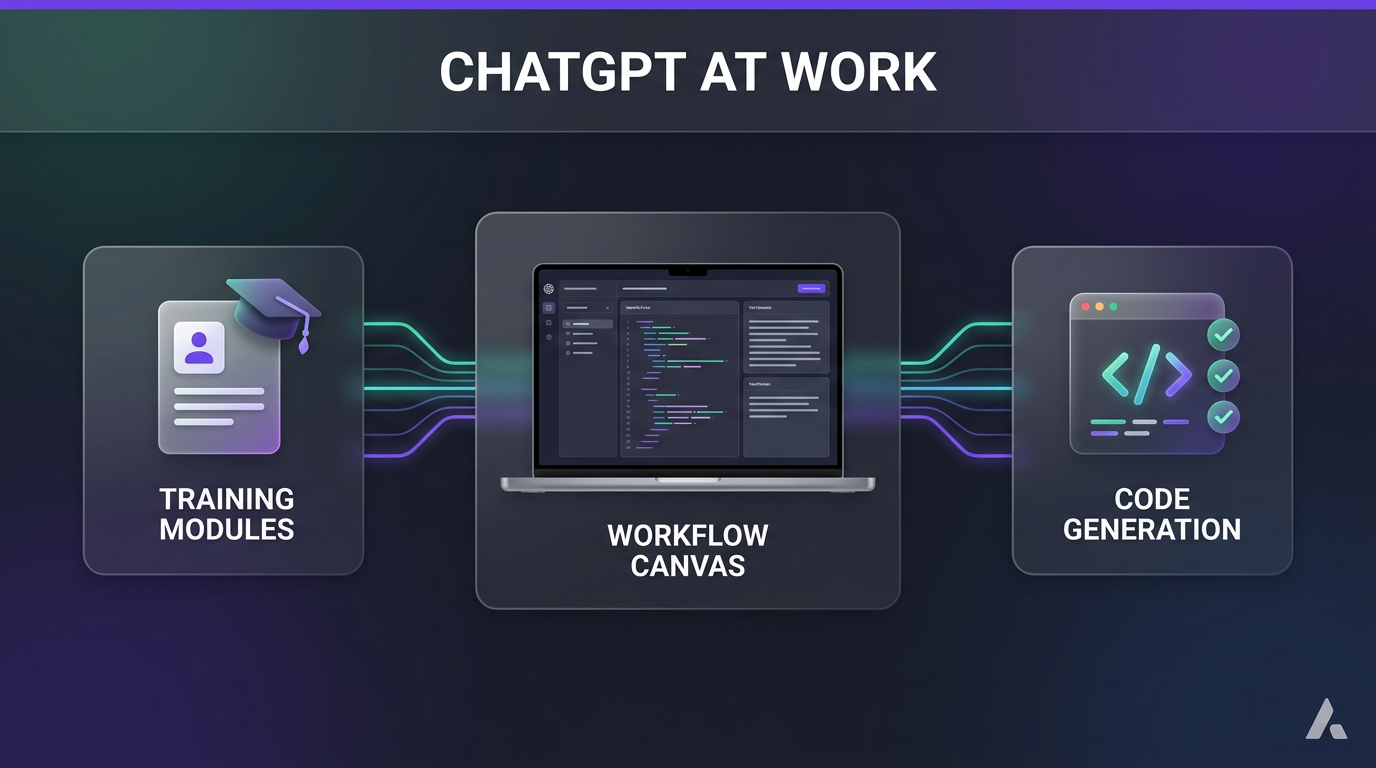
- Foundational Training: Non-technical staff learn basic prompt construction, document summaries, and administrative workflows.
- Technical Capabilities: Developers and technical teams receive documentation on using Codex features for code generation, bug fixing, and refactoring.
- Interactive Canvas Tools: Guidelines demonstrate how to co-edit content and refine code directly alongside the model in persistent workspaces.
The company states that these structured materials aim to address common workplace onboarding challenges, such as inconsistent output quality and privacy concerns among employee bases.
Who Benefits and Why Structured Guidance Matters
Business owners and department managers often encounter friction when team members use AI tools inconsistently. Providing standardized prompt structures and clear usage guidelines allows teams to achieve reliable outputs across daily communications, research, and technical tasks.
For technical leaders, the inclusion of specific technical guidance helps bridge the gap between simple text chat and actual software development support. Teams can establish clear protocols for when to use basic conversational interfaces versus structured coding environments.
Practical Implications for Daily Workflows
Integrating tools like ChatGPT at work effectively requires more than just distributing enterprise licenses. Companies that see high adoption rates usually establish shared prompt repositories and define specific boundaries for automated tasks.
Organizations looking to improve internal workflows can start by auditing repetitive manual tasks. Setting up standardized templates for client emails, report drafting, and internal updates ensures that team output remains consistent across departments, especially when connected with broader AI automation pipelines.
What This Changes for Client Builds
When building automation systems, clear user documentation and structured training remain critical. Wasif builds tailored systems using platforms like Make.com and Go High Level, incorporating established documentation standards so team members can comfortably manage and operate their automated workflows.
If you want to evaluate your operational workflows or implement practical systems for your business, feel free to reach out on the contact page.