Many organizations attempt to deploy artificial intelligence without evaluating whether their internal infrastructure can support automated workflows. According to insights published on the Make.com blog, running an AI readiness assessment before building scenarios prevents costly operational failures and misaligned integration builds.
An effective AI readiness assessment measures data accessibility, operational stability, and software connectivity across an entire business. Without this initial evaluation, teams risk connecting language models to fragmented data sources, producing unreliable outputs that require constant manual correction.
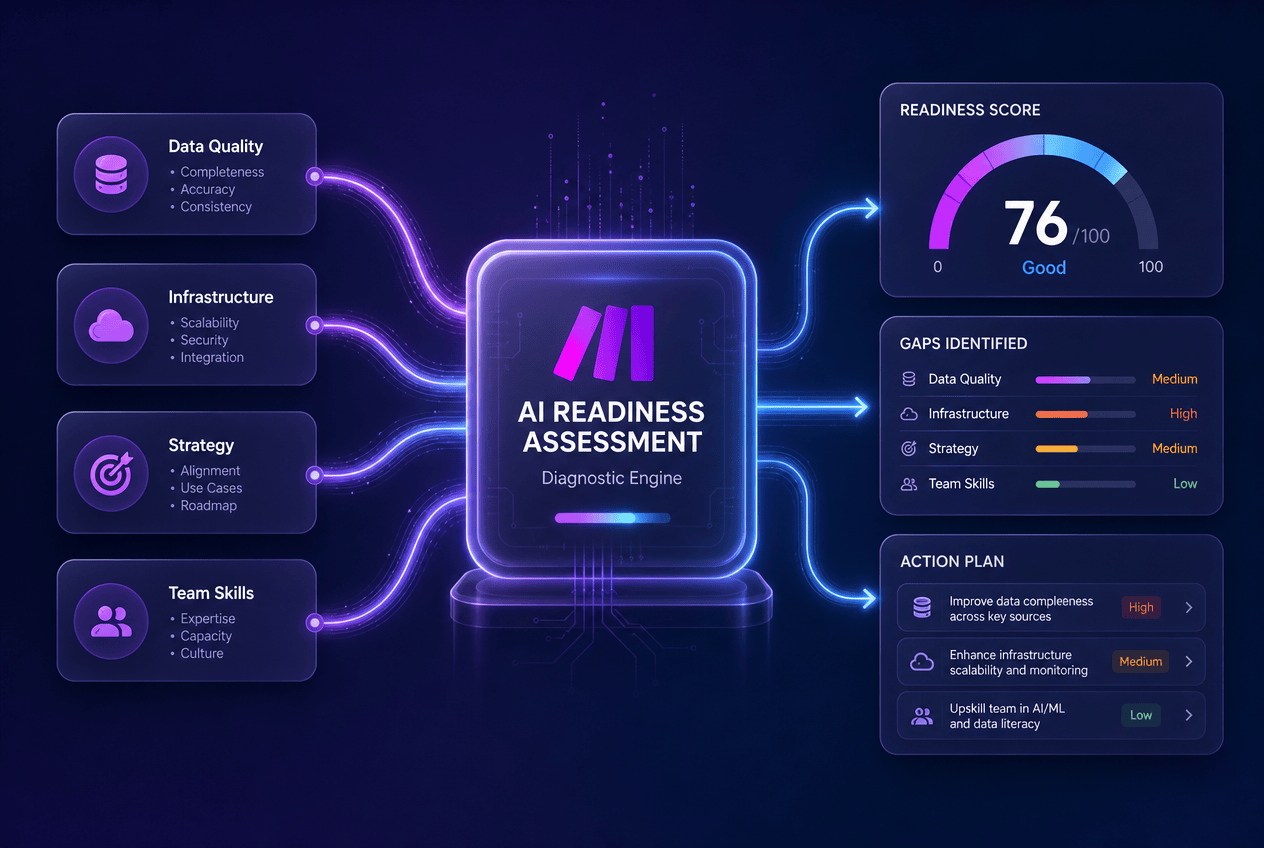
Core Pillars of an AI Readiness Assessment
Evaluating an organization requires breaking down technical capabilities and business operations into manageable criteria. Reviewing these core pillars helps teams understand where manual bottlenecks exist and where structured automation can provide immediate value.
Data architecture forms the foundation of any intelligent system. If customer records sit across disconnected spreadsheets or unstructured inbox text, artificial intelligence tools cannot query information reliably. Clean, standardized records stored in structured databases or accessible via APIs are necessary before connecting scenarios in platform tools.
Process maturity is equally critical for long-term reliability. Automating a broken or undefined workflow only accelerates bad operational outcomes. Organizations must document step-by-step business logic, exceptions, and fallback paths before attempting to construct custom AI automation pipelines.
How to Conduct an AI Readiness Evaluation
Executing an evaluation requires a structured review of daily tasks, software interfaces, and organizational goals. Business leaders should systematically analyze existing operations rather than trying to transform entire departments simultaneously.
Start by auditing high-volume repetitive tasks across your team. Focus on administrative duties, inbound lead distribution, invoice parsing, and routine support tickets. Quantify the weekly hours spent on these tasks to establish clear baseline costs.
Next, map software interfaces and data permissions across your stack. For instance, check if your primary CRM platform, such as Go High Level, provides accessible REST APIs or native webhooks to send and receive structured updates cleanly.
A standard checklist during an evaluation includes specific operational parameters:
- Clear input and output data definitions for every targeted business process
- Reliable API access and webhook capabilities across primary software tools
- Defined compliance protocols regarding client data privacy and security permissions
- Established human-in-the-loop review steps for non-deterministic automated outputs
- Documented performance metrics to measure speed and processing accuracy
Common Pitfalls in Business Automation Projects
A frequent error is attempting to automate complex multi-step reasoning before mastering simple data routing. Teams often design intricate multi-agent systems when a straightforward HTTP payload and a single structured prompt in Make.com would deliver faster, more reliable results.
Consider a practical scenario where a company wants to parse incoming client emails and log extracted project details into a database. If the incoming emails lack standardized formatting, sending raw message bodies directly into a language model call will yield inconsistent JSON outputs. Evaluating data structure beforehand allows builders to create validation steps early, preventing database corruption.
Another common risk is failing to set granular permission limits. Granting automated modules unrestricted administrative access to central databases can result in accidental data overwrites or unauthorized security exposure.
FAQs
What is an AI readiness assessment?
An AI readiness assessment is a systematic evaluation of an organization’s data quality, software infrastructure, and operational workflows. It identifies whether a business possesses the necessary technical foundation to implement automated tools successfully.
How long does an AI readiness assessment take?
A comprehensive evaluation for a small to medium-sized business typically takes between one and two weeks. This timeframe allows technical leads to audit software stack APIs, map data flows, and prioritize high-impact operational targets.
Which tools are evaluated during an AI readiness review?
The review covers core business applications, including CRMs, project management systems, cloud databases, and integration platforms like Make.com. Evaluators examine these applications to verify API availability, authentication methods, and data consistency.
Do small businesses need an AI readiness framework?
Yes, small businesses benefit significantly from assessing technical readiness before spending budget on custom software builds. Identifying data gaps early prevents project delays and ensures automation investments target the highest ROI workflows.
Putting Assessment Frameworks into Practice
When starting client projects, Wasif uses systematic technical evaluations to audit data structures before configuring Make.com scenarios or API endpoints. This initial audit clarifies technical boundaries and ensures automated workflows remain stable under high operational volume.
By auditing software connectivity early, Wasif builds clean integration systems that scale alongside business growth without fragile workarounds.
If you want to evaluate your business processes and identify high-value opportunities for automated workflows, feel free to reach out to discuss your project.