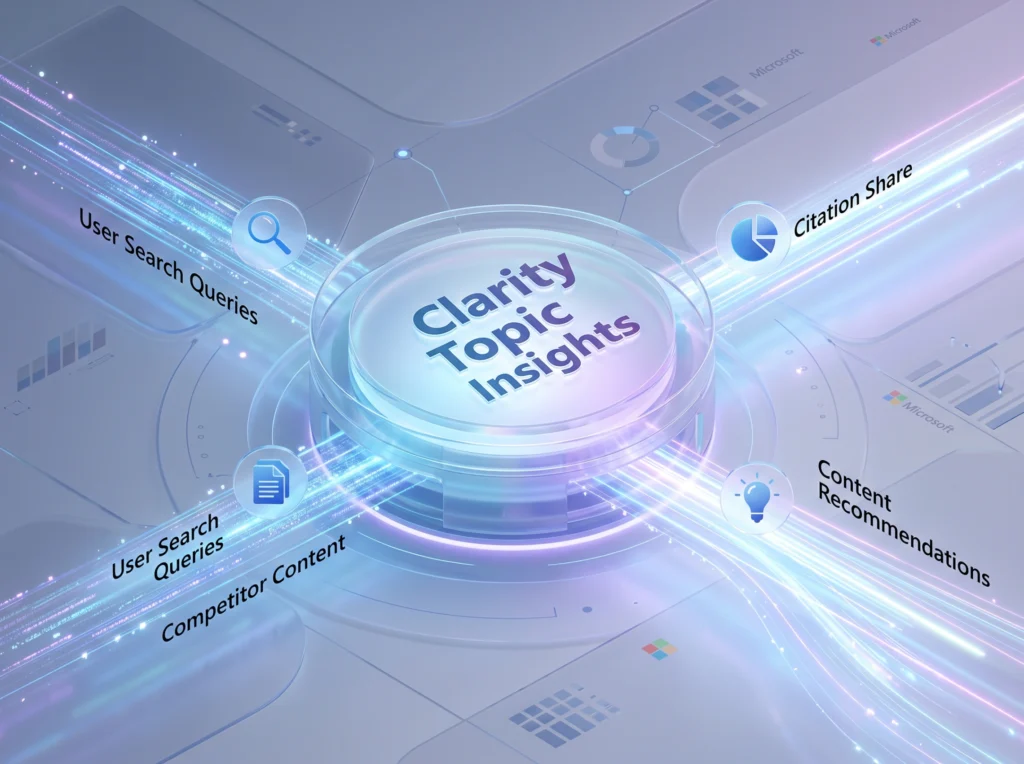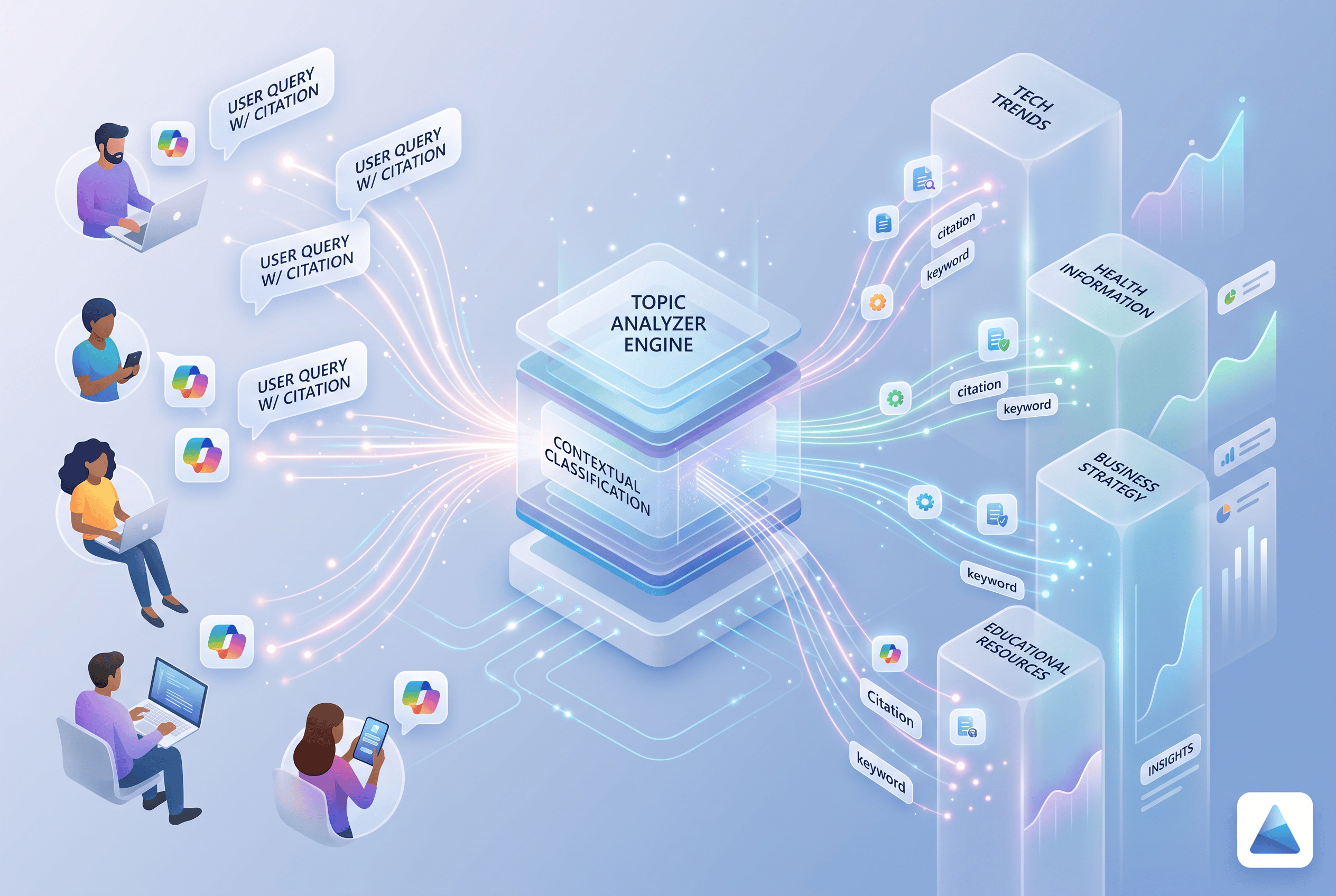
When conversational search tools cite a domain across thousands of prompts, tracking raw data points becomes chaotic fast. Microsoft recently introduced Query Topics to its analytics platform, as announced on the Microsoft Clarity blog. The feature automatically classifies AI citation queries into coherent topic groups, offering a clearer picture of how language models reference site content.
This addition expands Microsoft Clarity’s existing AI Visibility suite, which is currently available in beta testing. By grouping related grounding prompts into higher-level themes, the tool eliminates the need to manually organize thousands of individual query strings.
Key Changes Introduced in Clarity’s Beta Release
The update alters how teams interact with grounding data inside the Microsoft Clarity dashboard. Rather than presenting long spreadsheets of unstructured text, the dashboard now emphasizes aggregate performance metrics tied to specific subject areas.
Key capabilities introduced in this release include:
- Automatic Theme Classification: Unstructured prompt logs are grouped into broad domains and sub-topics based on citation activity.
- Share of Authority Metrics: Each topic displays quantitative metrics showing how frequently a domain is cited compared to competing web sources.
- Page-Level Distribution: Analytics reveal which specific URLs feed grounding responses for a given topic cluster.
- Data Export Functionality: Users can download organized topic data for external analysis or client performance decks.
For instance, a broad industry vertical like logistics might automatically split into specific query clusters such as freight tracking software or warehouse management tools. This structure helps web teams immediately spot which sub-niches generate citations.
Why Topic-Level AI Citation Queries Matter for Site Owners
Large language models rely on grounding processes to fetch facts before generating answers for end users. When an AI agent generates a response, it pulls information from multiple sources and provides attribution links back to the original websites.
Reviewing AI citation queries individually makes it difficult to detect broader visibility trends. A single website might earn citations across 1,500 distinct prompt variations in a single month. Sorting those prompts manually requires significant effort and yields fragmented insights.
Consider a concrete example involving an enterprise software blog. The site might receive citations for individual user prompts like “how to connect webhooks to CRM”, “Zapier alternative for lead routing”, and “automated lead intake setup”. Clarity’s Query Topics groups these 1,500 raw entries into structured categories like Lead Management and Integration Workflows, making data analysis immediate.
Practical Implications for Analytics and Content Strategy
Understanding which themes earn citations helps teams refine their technical content strategies. When a site demonstrates high authority in a specific topic, published articles in that category are more likely to be cited in future AI search responses.
Query Topics works alongside Topic Insights, another tool in the Clarity ecosystem. While Topic Insights allows teams to define specific target subjects to monitor proactively, Query Topics reveals the themes that are already driving real-world citations.
This dual approach helps builders align their technical site architecture with how search engines crawl content. Integrating structured data, clear semantic markup, and focused topic hierarchies ensures AI engines accurately parse site material. For projects involving custom web design strategy, structured data plays a core role in search engine readability.
What This Means for Client Builds
Wasif builds AI automation workflows and web systems that focus on measurable data rather than vanity metrics. Adding automated topic grouping into reporting dashboards provides clearer feedback on how search engines treat client content.
When Wasif builds client platforms, tracking search visibility requires looking beyond traditional keyword positions. By monitoring topic-level citations, site structures can be adjusted to strengthen authority in areas where AI models already pull grounding facts.
The Query Topics feature remains in beta rollout, with additional reporting enhancements planned in upcoming software updates. As conversational search adoption grows, structured citation reporting gives site owners a reliable method to monitor brand presence across AI platforms.
If you want to refine your web platform or build automated tracking systems for your business, contact Wasif directly at wasifahmed.dev/contact.