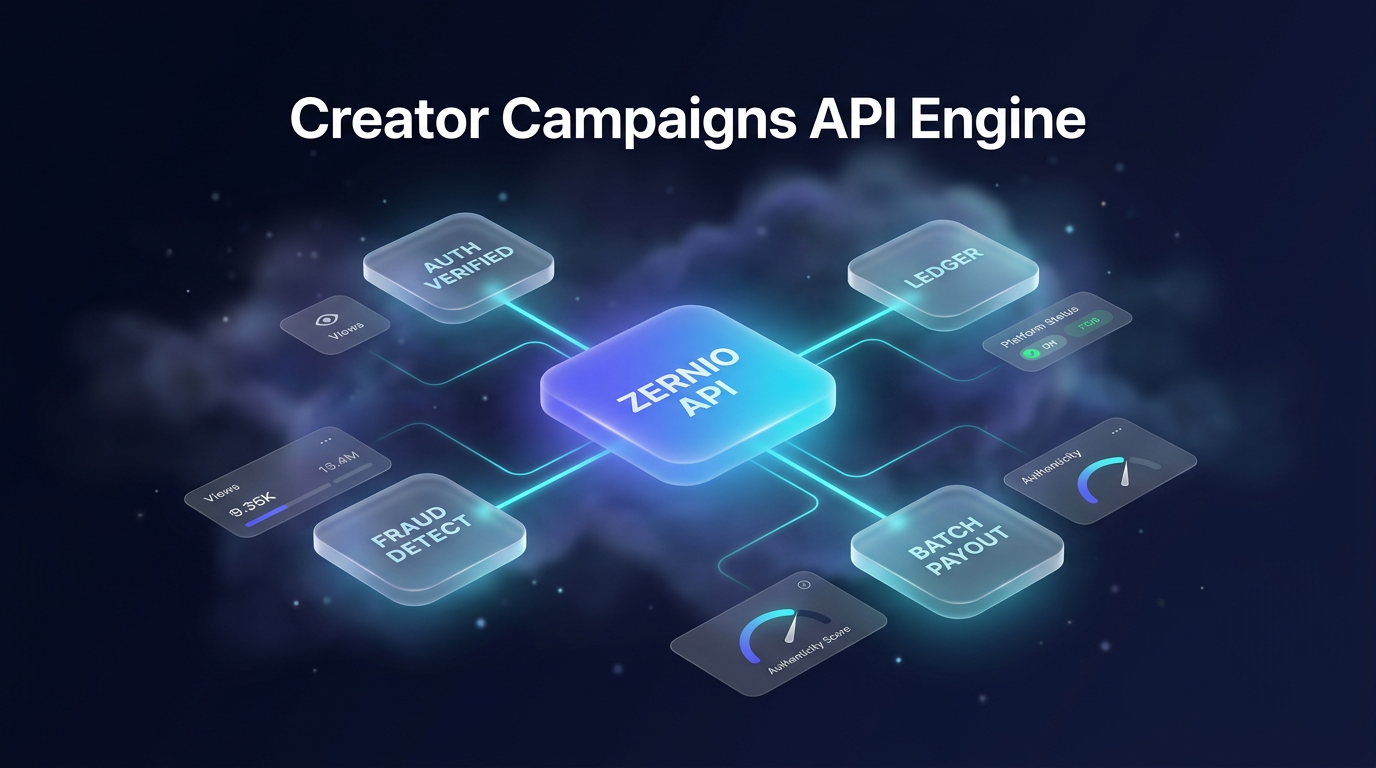
Zernio introduced a new creator campaigns API designed to handle video clipping, user-generated content (UGC), and creator performance campaigns directly through code. Announced on the Zernio blog, the release consolidates creator onboarding, direct-from-platform view verification, fraud scoring, and bulk payouts into the same interface developers use for social publishing and scheduling.
Before this release, building a UGC platform or clipping workflow required coordinating fragmented services. Developers had to build custom OAuth connect flows, scrape metrics or rely on creator screenshots, manually cross-check suspicious view spikes, and export spreadsheets to run creator payroll. The creator campaigns API wraps these responsibilities into nine modular building blocks accessible through REST endpoints and real-time webhooks.
The Key Changes in the Creator Campaigns API
The creator campaigns API lets software teams configure campaign terms, distribute custom invitation links, and read analytics directly from source networks. At launch, the system supports tracking across seven networks: TikTok, Instagram, YouTube, Facebook, X, Threads, and Pinterest.
Campaign creators establish their financial rules when creating the campaign record via POST /v1/creator-campaigns. The API accommodates five distinct compensation models:
- CPM arrangements paying a set dollar rate per 1,000 views or engagements, tied to a minimum view threshold.
- Pooled budgets distributed proportionally based on total verified views achieved by active participants.
- Recurring retainers paid on fixed weekly or monthly schedules.
- E-commerce performance commissions connected to Shopify or WooCommerce stores via coupon codes and tracking links.
- Ad performance splits calculated from ad spend, return on ad spend (ROAS), or direct purchase revenue.
Campaigns can enforce strict rules, such as capping the maximum payout per video, defining post eligibility windows, and restricting payouts strictly to organic traffic on supported channels like YouTube and X.
Automated Onboarding and Verification Flow
Once activated, campaigns generate either individual invite links or a public registration URL. Creators link their social channels through hosted, read-only authentication pages. This permission model ensures creators never share publishing rights or login credentials with the brand, protecting their accounts while granting read-only analytics access to the platform.
Developers using the creator campaigns API can retain their own branded front-end interface or deploy Zernio’s hosted join forms. When a creator uploads a draft, administrators can review timestamps, request revisions with pinned timeline notes, or approve the submission. After publishing, the creator pastes the public post link to bind it to the approved draft.
The system polls official platform APIs continuously. Post monitoring lasts for 30 days by default, with an option to extend verification up to 90 days. Every discrete data reading is retained in the campaign log, preventing dispute over metric fluctuations.
Authenticity Scoring and Fraud Detection Flags
A core problem in performance-based creator marketing is artificial engagement. The creator campaigns API evaluates incoming impressions and issues an authenticity score between 0 and 100 for each submission, accompanied by diagnostic status labels:
late_block: Identifies unnatural, sudden spikes in views long after publication rather than consistent organic growth curves.flat_engagement: Flags posts where comments, likes, and shares fall abnormally low relative to reported view counts.view_follower_gap: Marks videos displaying impression numbers disproportionately higher than the creator’s follower count without supporting share volume.cap_seeking: Highlights accounts whose view metrics repeatedly stop immediately beneath maximum payout limits.prior_flags: Tracks historical submission infractions associated with a specific connected profile.no_watch_signal: Notes platforms that withhold watch-duration metrics, lowering scoring certainty without penalizing creator balances.duplicate_post: Detects content already submitted to concurrent or prior campaigns.paid_views: Isolates creator-funded ad traffic on campaigns designated strictly for organic reach.
Zernio acts as an audit layer rather than an automated judge. The scoring engine flags suspicious anomalies, but the review queue leaves final approval or rejection decisions in human hands with transparent notes returned to the creator.
Financial Settlement and Ad Amplification
Financial management inside the creator campaigns API operates across four distinct ledger states: accrued, owed (approved), payable (following a 10-day safety hold), and settled. Businesses have three payout routing options depending on their legal structure and existing financial stack.
First, Zernio Treasury can process batch payouts using a single corporate card charge. Funds remain held for seven days to protect against chargebacks, followed by automatic disbursement to creators through Stripe Connect. Second, platforms can configure recurring daily or weekly auto-pay routines. Third, engineering teams can use the ledger strictly for balance calculations and accounting records while executing cash distributions through external rails like PayPal, wire transfers, or custom banking APIs.
After content validation, brands can deploy winning organic posts directly into paid marketing funnels using POST /v1/creator-campaigns/{id}/ads/launch. The API converts approved assets into Meta ads within existing ad sets or executes TikTok Spark Ads when the creator provides an authorization code. Performance data then attributes ad-generated sales and ROAS back to the originating creator profile.
Why This Update Matters for Software Teams
Building UGC infrastructure from scratch traditionally required engineering months of bespoke integrations. Developers had to secure API permissions across Meta, ByteDance, Google, and X, construct webhook pollers, build ledger logic, and manage fraud mitigation independently.
By exposing these capabilities through a single creator campaigns API, teams building AI video clipping tools can add revenue-sharing tabs directly inside their apps. Video editors can automatically pay clip creators per thousand impressions, UGC agencies can replace manual spreadsheets with white-label client portals, and e-commerce brands can automate ambassador payouts tied directly to store metrics.
Where This Fits in Real Client Projects
Wasif builds custom automation systems, and this unified data model solves common integration bottlenecks across social marketing pipelines. For businesses using social media management tools alongside custom software development, having verified post metrics accessible via standard webhooks makes syncing marketing pipelines significantly cleaner.
Instead of relying on disconnected third-party affiliate apps, a business can route verified creator performance directly into CRM software like Go High Level or internal databases. Webhook events like creator.joined, post.flagged, or payout.settled allow automated workflows to trigger instantly without polling overhead.
Frequently Asked Questions About the Creator Campaigns API
Which social platforms does the creator campaigns API support?
The API currently supports verified tracking and creator account connections across seven networks: TikTok, Instagram, YouTube, Facebook, X, Threads, and Pinterest.
Does the creator campaigns API automatically ban flagged submissions?
No, the API flags suspicious engagement patterns and assigns an authenticity score from 0 to 100, but it never automatically rejects submissions. Platform managers review the flagged data and decide whether to approve or deny the payout with an explanation.
Can businesses handle payouts using their own banking rails?
Yes, teams can use the creator campaigns API purely as an accounting ledger to calculate approved balances while paying creators externally via custom bank transfers, PayPal, or other payout providers.
Conclusion
The creator campaigns API provides developers and digital agencies with a structured, multi-platform backend for tracking organic content performance and managing contributor payouts. By linking direct social network verification with automated fraud scoring, teams can build customized UGC and clipping marketplaces without maintaining custom social scrapers. If you are planning an automation pipeline or custom dashboard for your creator initiatives, reach out to Wasif Ahmed to discuss building reliable integrations.