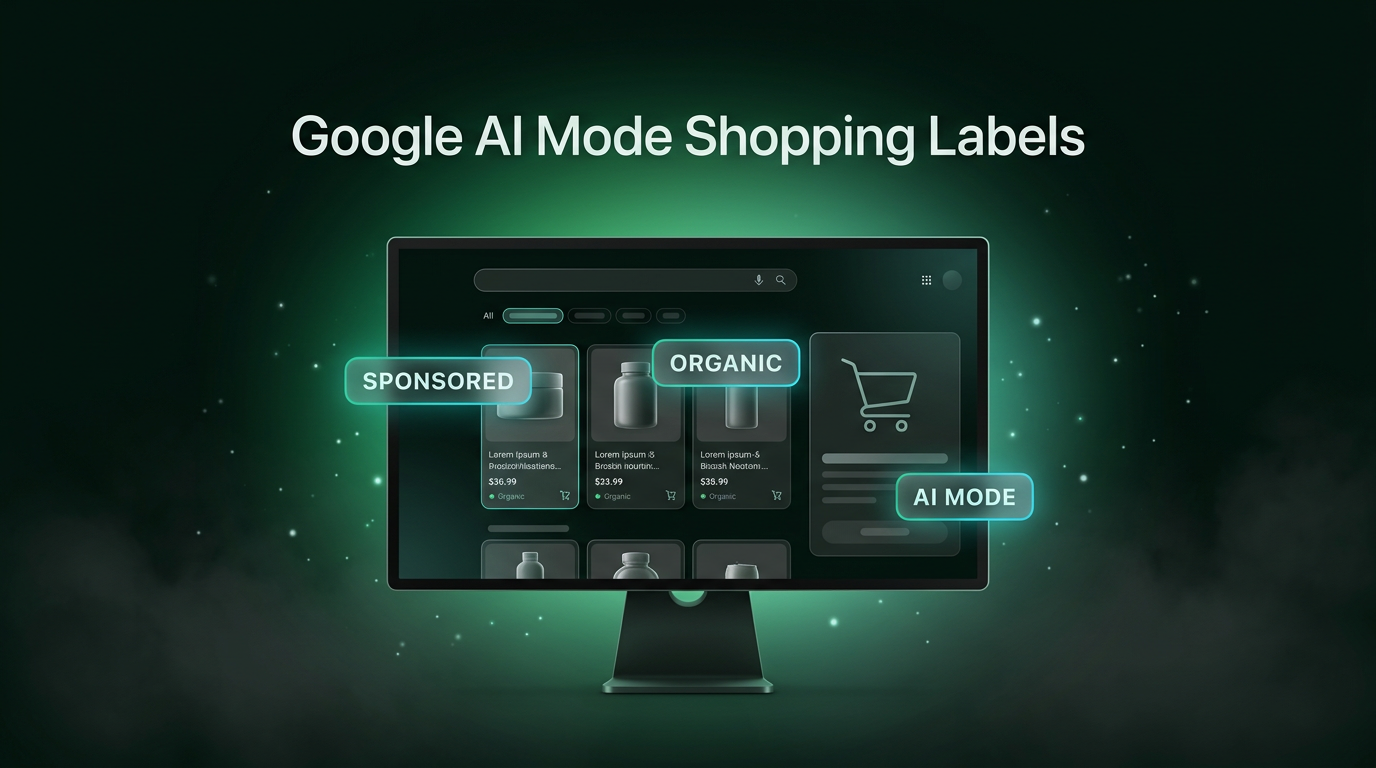
Google AI Mode shopping experiences are currently undergoing an interface update. Google is testing clearer labels to distinguish between sponsored and organic shopping results inside its AI Mode experience, as reported by Search Engine Land. The goal of this test is to help shoppers more easily differentiate paid product placements from organic shopping listings within AI-driven search interfaces.
As commercial features expand across conversational search, clear labeling plays a vital role for merchants and consumers. When search engines introduce generative responses, the boundary between paid advertisements and organic recommendations can become blurred. This recent test reflects Google’s continued adjustments as it expands advertising and commercial placements across its evolving artificial intelligence interfaces.
Search platforms have balanced advertising placements and non-paid organic content for decades. In traditional desktop and mobile layouts, organic listings occupy distinct blocks, while sponsored search results typically sit at the top or bottom with clear markers. Within conversational search summaries, products appear alongside contextual advice, comparison tables, and synthesized commentary. Establishing unambiguous demarcation lines inside conversational layouts ensures that users maintain confidence in the suggestions presented by the search engine.
The Key Changes in Google AI Mode Shopping
The primary change in this test is the explicit visual separation between paid merchant placements and unpaid entries. In standard search pages, sponsored badges have undergone numerous redesigns over the years, moving from shaded boxes to small text tags. Within AI Mode, product suggestions often appear directly inside answers, making explicit labels necessary for transparency.
Google is testing dedicated indicators that identify when a product card appears as an advertisement versus when it appears organically. By establishing distinct tags for sponsored items, Google AI Mode shopping interfaces give shoppers a direct way to identify commercial promotion before clicking through to an online store.
This visual adjustment does not remove commercial placements from the AI interface. Instead, it organizes the presentation so that commercial items are disclosed cleanly alongside algorithmic search results. Clearer labels assist shoppers who want to evaluate whether a product suggestion originates from paid merchant bids or algorithmic information retrieval.
The test also highlights how search engines must design user experiences for multi-turn conversations. Shoppers often ask follow-up questions about specifications, dimensions, or return policies. Clear identifiers allow users to track which recommendations are promoted inventory and which items are surfaced purely based on query relevance.
Why Clearer Labeling Matters for Shoppers and Retailers
Clarity in digital advertising protects consumer trust. When shoppers browse through conversational recommendations, they want to know whether a product recommendation is an algorithmic match or a paid ad placement. Clearer disclosure provides shoppers with the context needed to make informed purchase choices.
For ecommerce brands, the separation provides important clarity regarding organic visibility. Retailers investing heavily in product feed optimization and search engine visibility want reassurance that their unpaid listings stand on their own merit. When organic listings are clearly marked, brands can better analyze how non-paid discovery performs in AI-driven environments.
At the same time, advertisers benefit from distinct labeling. Clear sponsored badges ensure that ad impressions satisfy advertising disclosure standards, reducing friction and ensuring that clicks come from visitors who recognize the commercial nature of the placement.
When users mistakenly click sponsored listings thinking they are purely editorial suggestions, high bounce rates can follow if the landing page does not match expectations. Transparent tagging sets accurate expectations before the user leaves the search engine page.
Practical Implications for E-Commerce Visibility
As Google continues testing these formats, online store owners should monitor how their product data flows into conversational search features. Strong product feeds, structured data, and clean technical foundations remain the foundation of both organic and sponsored placements.
Here are several practical areas store owners and marketers should consider:
- Feed accuracy: Product descriptions, availability status, pricing, and high-resolution images must match the merchant center feed exactly. Discrepancies between feed data and live storefront data can lead to product rejections or misaligned listings.
- Structured schema: Adding product schema and merchant listing markup to product pages helps automated systems parse item availability, shipping options, and technical specifications accurately.
- Brand clarity: With distinct sponsored and organic tags, shoppers will evaluate brand reputation and pricing directly within the AI answer box before visiting a retail domain.
- Ad budget allocation: Advertisers should assess whether paid placements inside AI experiences deliver conversion rates comparable to standard search ads. Testing small campaign segments helps teams understand returns on commercial inventory.
- Product variants: Offering clear variant attributes such as color, size, and material in structured feeds helps conversational search engines map specific inventory to precise user questions.
Businesses that combine structured catalog management with thoughtful web designing ensure their storefronts render quickly and convert traffic arriving from both paid and organic AI links.
Adapting Marketing to Google AI Mode Shopping Formats
The presence of commercial modules inside conversational search means generative search optimization requires dual attention. Brands cannot rely solely on paid budgets, nor can they ignore paid ad inventory as search interfaces evolve.
Organic search optimization in conversational engines depends heavily on context and relevance. When Google generates a response for a specific product category, it selects items that match user criteria like size, compatibility, or specific attributes. If organic items receive clearer badges, high-relevance products can capture valuable buyer attention without recurring ad spend.
Meanwhile, the sponsored section remains an essential channel for fast placement. Paid shopping listings offer immediate presence for competitive search queries where organic positioning takes time to develop. Balancing these two avenues will become increasingly important as conversational interfaces roll out to wider audiences.
Understanding performance trends within Google AI Mode shopping environments will require merchants to review both paid reporting in Google Ads and organic performance reports in Google Search Console. Observing differences in traffic behavior across these channels helps teams determine which product lines succeed organically and which require ad support.
What This Changes for Client Builds
Wasif builds custom automation workflows, customer relationship management pipelines, and web systems for online businesses. When search platforms update how product cards and commercial disclosures are presented, downstream systems feel the effect.
For ecommerce workflows, Wasif often pairs clean catalog management with AI automation to sync inventory changes directly across marketing channels and CRM databases. Clear labeling in Google AI Mode shopping reinforces the need for accurate, real-time inventory updates so that when consumers click an organic or sponsored card, product availability and customer data pipelines function without errors.
Furthermore, technical infrastructure must handle fluctuating traffic patterns. When an organic card gains prominence inside an answer summary, traffic spikes can occur without advance notice. Maintaining efficient hosting architectures, optimized databases, and clean checkout funnels protects store operations during high-volume periods.
Frequently Asked Questions About Google AI Mode Shopping
What is the main purpose of the current label test?
The test introduces clearer visual labels to differentiate paid product advertisements from organic shopping listings within generative search responses. This allows consumers to understand whether an item is displayed due to commercial sponsorship or algorithmic relevance.
How does Google AI Mode shopping determine which organic products to display?
Google AI Mode shopping systems rely on indexed product data, structured markup on merchant websites, and Merchant Center feeds. Algorithms match product attributes against the specific context of user queries to present the most relevant items.
Do store owners need to pay to appear in conversational results?
No. While sponsored placements require advertising spend, organic product listings can appear based on algorithmic relevance, structured data implementation, and catalog accuracy.
Will clearer badges affect ad performance for merchants?
Explicit badges help ensure that users who click sponsored listings are aware of their commercial nature. While this may alter raw click volumes, it often improves click quality by connecting retailers with shoppers who intend to browse commercial products.
A Grounded Outlook on AI Shopping Interfaces
This labeling update remains an active test rather than a permanent universal launch. Google routinely iterates on ad badges, font sizing, and placement boundaries before rolling out permanent changes to global users. Observers should expect further visual refinements as user feedback arrives.
The test demonstrates that transparency remains a core operational concern for search engines introducing generative tools. Clear differentiation between commercial advertising and organic discovery will define how consumers interact with Google AI Mode shopping platforms in the months ahead.
If you are looking to prepare your ecommerce infrastructure, streamline inventory data, or build reliable automation for your online store, visit Wasif’s contact page to discuss your project.