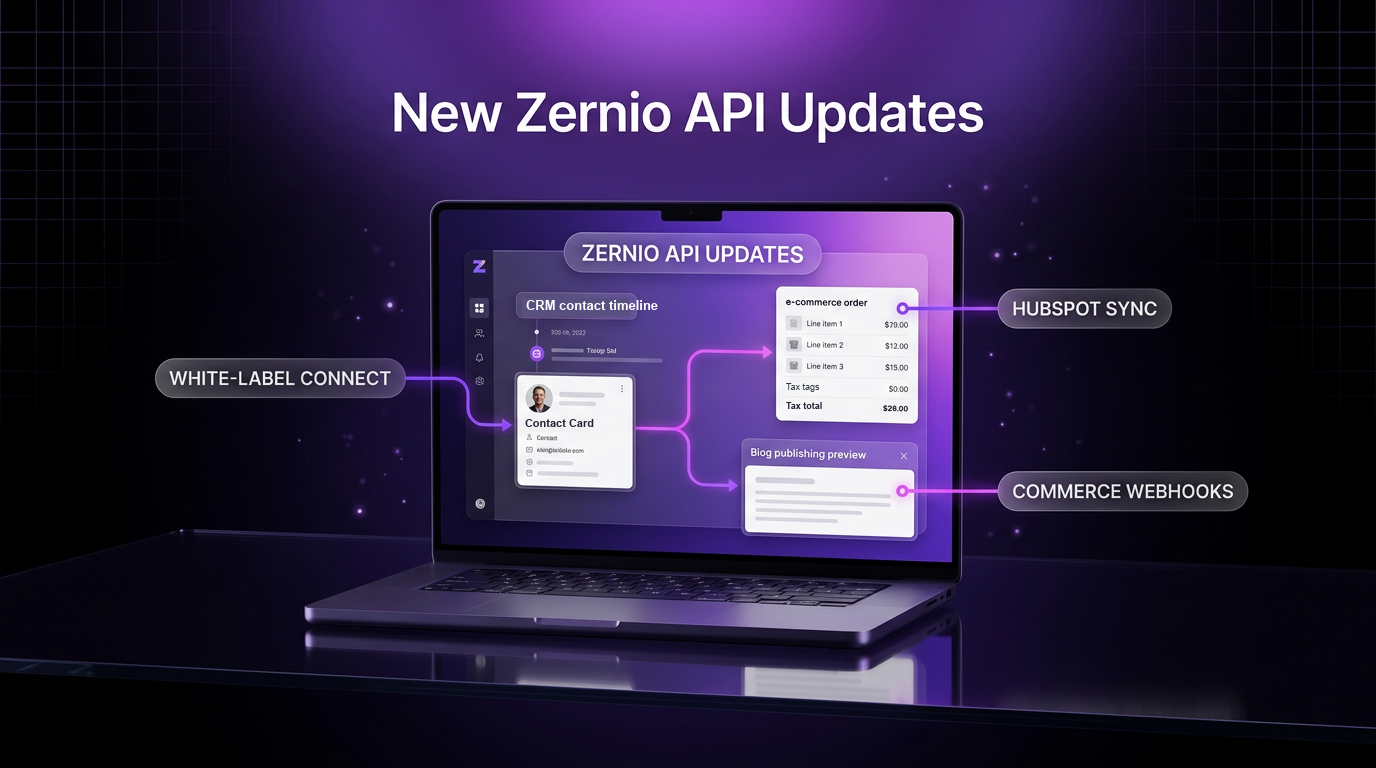
The latest Zernio API updates introduce white-label connect flows, cross-platform blog management, and live order tracking across e-commerce channels. Developers managing integrations across multiple networks often spend hours configuring platform requirements and user onboarding screens. This release focuses on reducing friction by centralizing social, CMS, and commerce tasks inside a single unified infrastructure.
As detailed in the official release notes, the developer platform added support for HubSpot inbox syncing, expanded the Blogs API to Wix and Webflow, and added order tracking capabilities for online stores. Zernio supports publishing, scheduling, and asset distribution across 16 different platforms through a single programmatic interface.
Custom White-Label Connect Screens
A core addition in these Zernio API updates is the ability to whitelabel authentication screens. When end users connect external social and marketing accounts, they typically encounter platform defaults that break agency branding. The update allows developers to inject a custom company name and logo directly into the pre-consent screen.
Instead of sending users straight into third-party permission prompts, the interface presents the agency or platform identity first. The configuration saves once at the workspace level, applying immediately across every connection workflow. This allows service providers to offer a cohesive, professional software experience without exposing the underlying connector tools to their clients.
By white-labeling these connection flows, software teams can onboard clients into multi-account management setups without redirecting them through generic third-party screens. The user sees the host software branding up front, which creates trust before the external platform prompts for user permissions.
HubSpot Inbox Syncing and Contact Automation
Customer communication workflows receive direct backing in this rollout. HubSpot now functions as a direct connection within the messaging inbox. Whenever messages flow in or out through connected channels, the data maps straight into the relevant contact timeline in HubSpot.
Identity matching works automatically using standard data points:
- Automatic matching by primary email address or recorded phone numbers
- Creation of new records when incoming sender details do not match existing contacts
- Custom workflow steps that create or update HubSpot records after qualifying questions
- Instant storage of survey and conversational replies directly onto CRM timelines
For builders constructing lead capture pipelines, this removes the need for separate webhook handlers to sync routine inbox chats with customer records. This aligns closely with modern AI automation stacks where conversational bots qualify prospects before passing updated timelines to sales teams.
Because teams can configure updates at any point during a conversation workflow, qualification data remains clean. For instance, when a contact provides an answer to a specific qualification question, that answer can be attached directly to their HubSpot record without secondary export routines.
Publishing to Wix and Webflow via the Blogs API
The Blogs API has expanded its publishing footprint by adding full integration support for Wix and Webflow websites. Builders can now create, retrieve, update, and remove blog posts or hold entries as drafts using API calls across both ecosystems. Posts deployed to Wix environments also support native scheduling.
The expansion introduced through these Zernio API updates provides content operations with unified endpoints for multi-CMS architectures. Rather than writing distinct payload handlers for Webflow collections and Wix blog schemas, engineers can use standardized calls to manage post states.
In addition to drafting and publishing articles, both website platforms now accept tracking tags through the API. Teams can programmatically embed ad pixels and analytics scripts on target websites without touching underlying site templates. This capability simplifies automated content distribution for teams handling multi-site web designing and ongoing content syndication.
The pixel injection feature eliminates the manual step of accessing client site settings to install marketing tags. Marketing teams can roll out conversion tracking pixels across multiple connected properties from a centralized automation script.
Instagram Endpoints and Media Previews in the Zernio API Updates
Social media workflows benefit from four dedicated Instagram endpoints in this release. The new tools let applications query posts where an account is tagged, enabling automated user-generated content monitoring. A dedicated collaborator endpoint tracks pending and accepted collaboration requests on published posts.
The update also delivers endpoints to verify whether an account is actively broadcasting live video, alongside expanded direct messaging features that support heart stickers and native post sharing. Each shared post or sticker transmits as an independent message within the conversation thread.
Alongside these endpoints, developers can preview media formatting before triggering publishes. Previously, asset transcoding occurred behind the scenes. Developers can now run transformation routines manually to verify how wide videos crop for formats like Facebook Stories before anything goes live. If an uploaded file already meets target platform rules, the system returns the original file untouched.
Order Management in the Commerce API
Commerce integrations gain substantial depth through expanded order tracking. Connected Shopify and WooCommerce shops can now export full order records directly to developer endpoints. The payload delivers specific transactional data including itemized products, applied discount codes, collected taxes, shipping logistics, transaction statuses, and issued refunds.
The system relies on automated webhooks rather than recurring database polling. Webhooks dispatch automatically whenever an order is generated, modified, or refunded by the store. This real-time payload structure supplies the event data required for order notifications, fulfillment handoffs, and synchronized inventory adjustments across external systems.
By incorporating webhook events for refunds and status changes, backend systems can trigger customer follow-up emails, update external dashboards, and alert fulfillment centers without making repetitive API requests against store catalogs.
Implementing Zernio API Updates in Client Systems
Wasif builds custom automation architectures and client portals that link marketing platforms with operational backends. The Zernio API updates simplify the infrastructure required to connect social channels, online stores, and customer records. By eliminating custom middleware for basic tasks like inbox timeline logging and order webhooks, teams can focus engineering effort on business logic rather than connector maintenance.
When deploying these endpoints, Wasif structures webhook listeners to route commerce and inbox events into secure database tables. This architecture ensures that data coming from Shopify or HubSpot remains synchronized with internal administrative portals while respecting rate limits and schema constraints.
Teams managing multi-brand portfolios can also standardize content delivery. Instead of maintaining disparate API wrappers for each social and CMS network, systems can use unified endpoints to dispatch assets, schedule content, and monitor inbound messages.
Frequently Asked Questions About the Zernio API Updates
What platforms are supported for blog publishing?
The Blogs API currently supports Wix and Webflow alongside existing publishing targets. Developers can create, update, delete, or draft posts on both networks, and schedule posts on Wix.
How do the Zernio API updates handle CRM contact creation?
Within the Zernio API updates, the HubSpot integration matches contacts by email address or phone number. If an incoming message does not match an existing contact, the integration creates a new contact record automatically.
Can developers test video transformations before publishing?
Yes. The media preparation endpoint allows developers to process and inspect transformed images and videos before publishing, verifying how wide videos adapt to vertical formats such as Facebook Stories.
Which e-commerce platforms provide order data via webhooks?
Both Shopify and WooCommerce support order listings, order detail retrieval, and automated webhooks for creations, updates, and refunds through the Commerce API.
Wasif evaluates and integrates modern tools to keep client software reliable and scalable. If you need assistance integrating custom workflows, CRM pipelines, or automated publishing systems into your business operations using the Zernio API updates, reach out to Wasif to discuss your project.