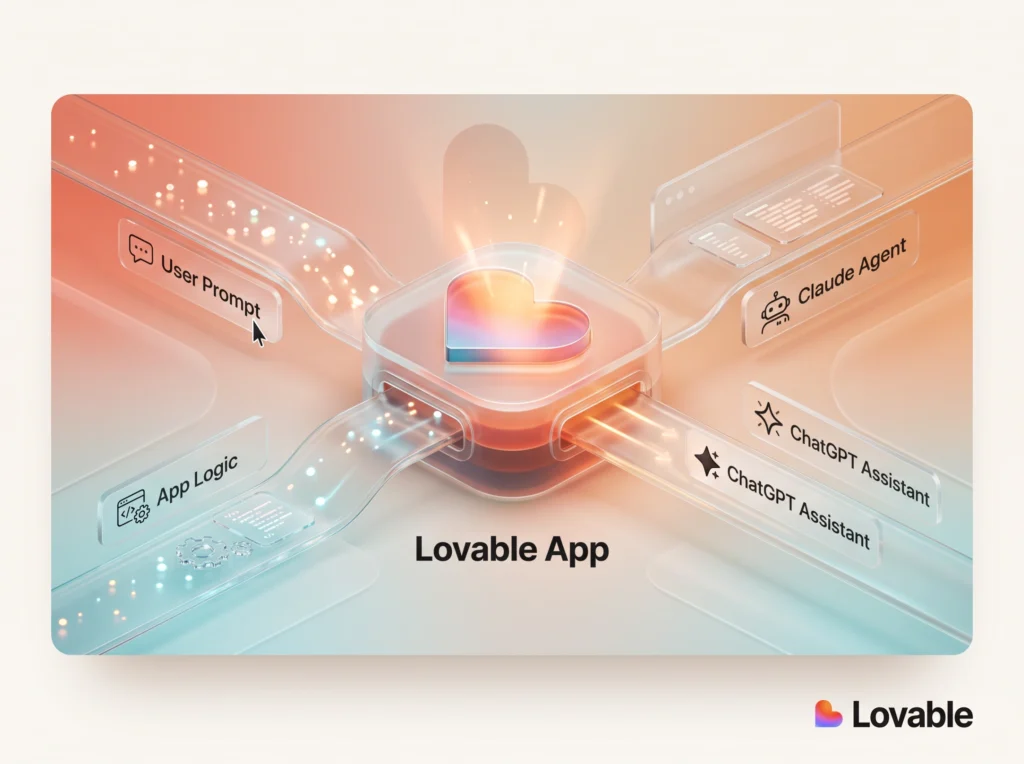
Lovable on AWS is now available in private preview for select Enterprise customers who need to keep production workloads inside their own cloud environment. Lovable announced the release to address strict compliance policies that prevent organizations from storing sensitive data on third-party infrastructure. The update allows development teams to build applications inside Lovable while running the resulting runtime, databases, and sensitive connections directly inside an Amazon Web Services account they own.
Until this release, all projects built with the platform ran on Lovable’s multi-tenant cloud. While that configuration suits standard business tools and rapid prototypes, regulated industries face strict data governance boundaries. As announced on the Lovable blog, the new model separates the design and orchestration environment from the application data plane, giving enterprise security teams direct control over their infrastructure.
How Lovable on AWS Runs Inside Corporate Accounts
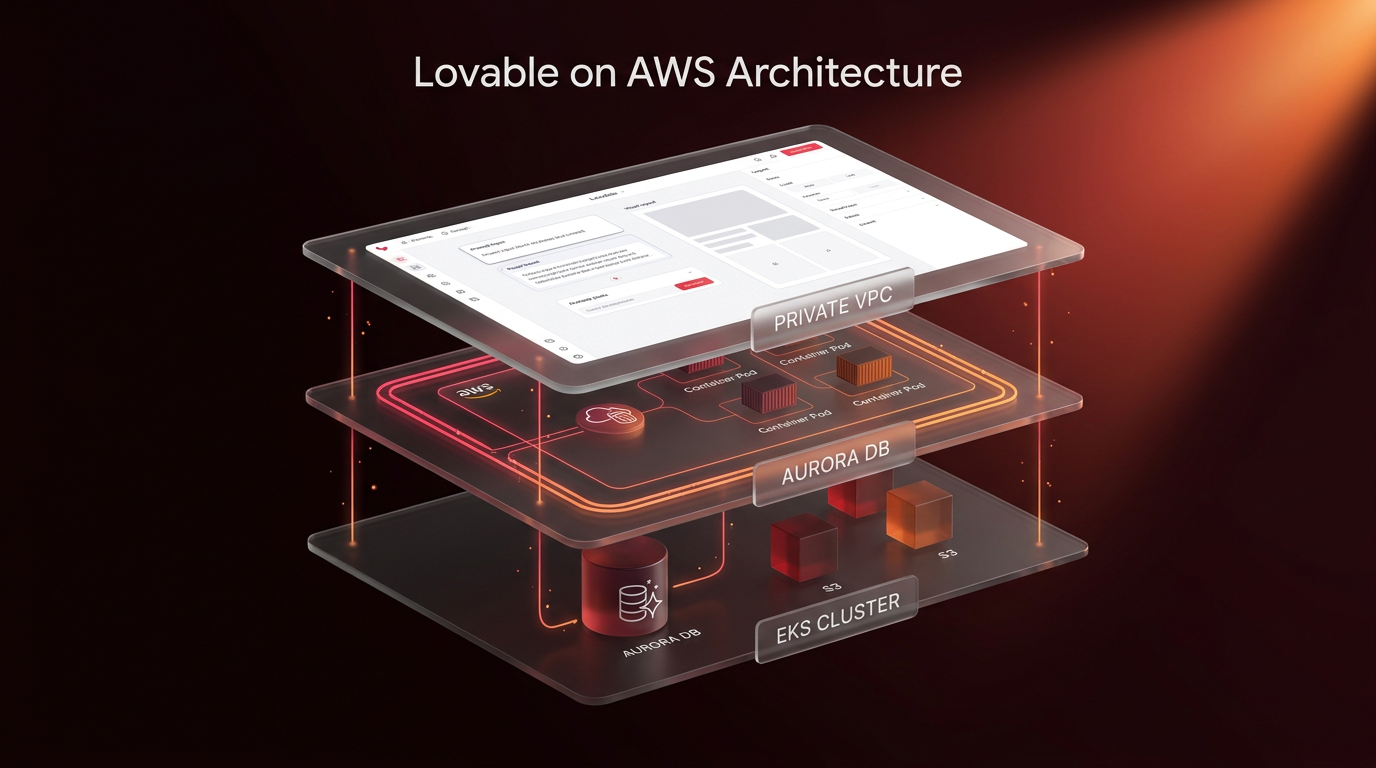
When an organization opts for Lovable on AWS, Lovable provisions a dedicated Virtual Private Cloud (VPC) inside the customer’s AWS account. This isolated environment hosts every runtime component required to support the application lifecycle without routing internal company records through external servers.
The components deployed into the customer’s account include:
- The Lovable data plane operating on an Amazon Elastic Kubernetes Service (EKS) cluster, hosting the preview sandboxes where builds execute during development.
- Production application environments featuring static assets stored in Amazon S3 and dynamic execution handled by AWS Lambda functions.
- The primary application database running on Amazon Aurora PostgreSQL alongside file storage in Amazon S3.
- The connector gateway that manages secrets and handles integration traffic for external services.
- System logging pipelines configured to forward telemetry directly into Amazon CloudWatch or custom S3 log archives.
Internal corporate databases, enterprise resource planning platforms, and internal customer management records communicate with the VPC via AWS VPC peering. Because connections route over private network channels, sensitive systems remain completely isolated from the public web.
What Runs in the Customer Account Versus Lovable
The operational split in Lovable on AWS keeps the user interface responsive while maintaining data isolation. The multi-tenant Lovable service continues to host the visual editor, the AI orchestration agent, project chat histories, user identity records, and workspace configuration settings. In addition, prompt requests submitted while building applications continue to pass through Lovable’s AI processing infrastructure.
In contrast, production application data never leaves the customer’s network. The databases, file uploads, server logs, and user tables created by end-user applications exist entirely inside the customer’s Amazon EKS and Aurora PostgreSQL instances. Organizations that want even tighter control over their building process can connect their own AWS Key Management Service (KMS) key in workspace settings, allowing administrators to revoke Lovable’s access to encrypted chat and project history at any point.
Setup and Operational Architecture for Lovable on AWS
Setting up Lovable on AWS begins inside the Enterprise administrative dashboard. An administrator creates an Enterprise workspace and designates AWS as the hosting target. Lovable then outputs an AWS CloudFormation template that the company’s cloud engineering team can inspect before execution.
Executing the CloudFormation stack spins up the VPC, configures necessary Identity and Access Management (IAM) permissions, and launches an EC2 instance hosting the Lovable runner. This runner acts as the management agent that builds out the EKS cluster, configures Aurora PostgreSQL, and provisions storage. The runner operates under the principle of least privilege by employing distinct IAM roles for initialization, routine maintenance, and environment teardown.
Ongoing maintenance does not require customer engineers to patch underlying application containers manually. Lovable delivers updates through versioned Helm charts that pull signed container images into the customer’s container registry. The runner communicates exclusively with Lovable’s management endpoint over an outbound, mutual TLS (mTLS) encrypted tunnel. Because the runner only establishes outbound traffic, enterprise network teams do not need to open inbound firewall ports into their private network.
Why Enterprise Teams Require Private Cloud Deployments
Enterprise compliance policies often prohibit sensitive internal records from crossing external cloud boundaries. A common example involves human resources applications. If an internal team builds a custom portal for employee leave planning, the software must read and write data directly to the corporate HR management system. Company policy typically dictates that employee personnel records cannot reside on external multi-tenant infrastructure.
If that internal portal runs on a third-party hosted platform, it cannot pass enterprise security review. By establishing the workspace inside an owned AWS account, the application and its underlying database remain inside the corporate perimeter. The software connects to internal HR databases over private VPC peering without exposing personnel data to public transit routes.
Enterprise Adoption and Real-World Implementation
Global telecommunications provider Deutsche Telekom served as an early enterprise partner for this architecture, taking its deployment live in October. The organization uses Lovable within AskT, its internal artificial intelligence productivity platform, enabling staff to build applications connected to internal human resources data and back-office services without violating internal security mandates. Their teams have already generated thousands of applications and prototypes under this model.
Enterprise workspaces utilizing this setup maintain the standard governance controls expected in corporate IT environments. These include Single Sign-On (SSO), System for Cross-domain Identity Management (SCIM) provisioning, default restrictions that limit application publishing strictly to workspace members, and automated security scanning on every software build.
For teams scaling their internal systems, integrating these standalone deployments with external automations becomes much more predictable. Teams that use AI automation to route business information can direct webhooks and API payloads into isolated endpoints with verified network boundaries.
Practical Implications for Technical Teams
Deploying Lovable on AWS introduces trade-offs between administrative convenience and compliance control. Standard multi-tenant hosting remains the default option for most teams because it requires zero cloud administration. Managing workloads in an owned AWS account incurs standard AWS infrastructure charges, including expenses for EKS control planes, Aurora PostgreSQL database hours, and NAT gateway bandwidth.
Furthermore, Lovable notes that the private preview does not yet possess complete feature parity with its multi-tenant environment. Select collaboration and instant deployment features are still under active development as the engineering team works toward full alignment between the two hosting models.
Organizations planning their internal software stack can combine this private deployment approach with structured web designing standards to deliver polished internal portals that adhere to rigorous internal governance rules.
Frequently Asked Questions About Private Cloud Hosting
Can organizations run hybrid workspaces across both environments?
Yes. Many organizations maintain standard workspaces on the multi-tenant service while deploying Lovable on AWS for projects that handle restricted business data. This hybrid approach lets teams build low-risk internal prototypes quickly on managed infrastructure while reserving dedicated cloud accounts for regulated production tools.
How does the Lovable runner handle ongoing security updates?
The runner downloads versioned Helm charts that reference signed container images stored in the customer registry. It establishes only outbound mTLS connections to Lovable’s runner endpoint, meaning administrators never have to allow inbound connections through corporate perimeter firewalls.
What This Changes for Client Builds
Wasif designs and deploys custom workflow tools, client portals, and automation backends for growing businesses. In past implementations, enterprise clients often had to choose between fast visual app development and strict data residency policies. The introduction of private infrastructure deployment options shows that visual development tools are maturing into serious enterprise options.
With the release of Lovable on AWS, enterprise development teams gain the ability to combine rapid iteration with verified network boundaries. Wasif monitors updates across modern development frameworks to help clients choose architectures that keep proprietary customer data isolated while maintaining quick delivery timelines.
Evaluating Lovable on AWS allows engineering leaders to unite visual development with strict data governance. If you need help designing your internal workflows or implementing secure business platforms, reach out through the contact page to discuss your project requirements.