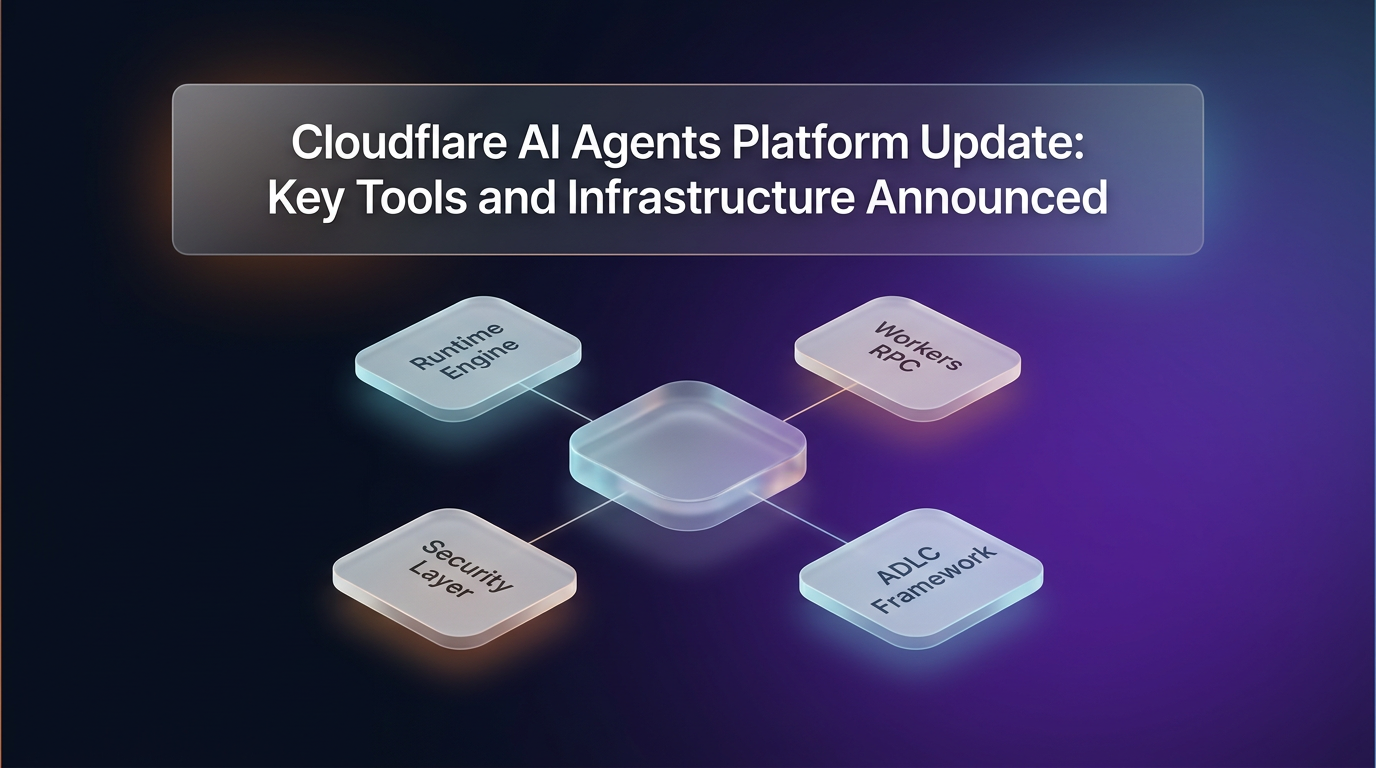
Cloudflare dedicated a full week of product announcements to autonomous software infrastructure, detailing new tools designed for building, running, and managing Cloudflare AI agents. The announcements focused on addressing the operational challenges that emerge when moving autonomous software from early prototypes into active production environments, including identity, execution runtimes, security controls, and payment primitives.
Key Platform Additions for Autonomous Systems
The announcements introduced several infrastructure layers across execution, security, and web protocols. Rather than focusing solely on language models, Cloudflare focused on the surrounding software stack that agents require to run reliably.
Execution Layer and Developer Lifecycle
Cloudflare introduced @cloudflare/computer, a specialized runtime designed to select appropriate environments based on job demands. For developers building multi-language applications, Workers RPC now supports direct communication between Python and JavaScript Workers without requiring complex REST wrappers.
The company also introduced the Agent Development Lifecycle (ADLC) framework alongside a product named Cloudflare Agents. This tool provides live execution tracking, step-by-step distributed tracing, and human-in-the-loop approval triggers directly in production. For automated maintenance, Cloudflare shared details on programmable CI/CD pipelines where autonomous routines analyze code failures and stage proposed fixes for human review.
Security Models and Transaction Protocols
Security updates focused on managing agent permissions and monitoring activity across networks. The Agent Access Model provides a framework for managing how autonomous tools authenticate and access resources on behalf of human users.
To prevent unwanted behavior, Cloudflare announced WriteGuard for Model Context Protocol (MCP) servers. This feature gives administrators granular control over tool calls to prevent unintended database or file modifications. To track activity, identity-aware analytics link model requests back to specific user accounts, making spend spikes and anomalous API calls easier to identify.
Cloudflare also announced Cloudflare Wallets, an infrastructure component aimed at enabling autonomous systems to complete programmatic transactions securely.
Web Protocols and Search Infrastructure
To help agents interact with existing web content, Cloudflare released several protocols and browsing primitives:
- WebMCP: An interface designed to make standard websites easily discoverable and actionable for autonomous software.
- MCPv2: A rewritten version of the Model Context Protocol intended to improve deployment stability and scaling for complex agent tasks.
- Kitesurf: A lightweight browser that runs in V8 isolates on Cloudflare Workers, trading pixel rendering for lower CPU and memory consumption.
- Cloudflare AI Search: A single-command tool that converts uploaded documents or website pages into an indexable search engine for model queries.
Why These Changes Matter for Developers and Businesses
Building reliable systems with Cloudflare AI agents requires more than standard API prompts. Software agents require persistent memory, controlled access, predictable compute budgets, and clear execution limits. When agents run without boundary controls, businesses face risks related to infinite execution loops, unauthorized data modification, and uncontrolled API expenses.
By moving agent management into the network layer, Cloudflare aims to provide standard governance tools. System administrators can set precise boundaries for what an agent can read, write, or spend before deploying it to handle user tasks.
Practical Implications for Enterprise Workflows
Organizations planning to deploy autonomous agents must evaluate their existing infrastructure. Standard web application firewalls and basic API keys were designed for human users or static scripts, not software that makes dynamic decisions in real time.
Using protocols like WebMCP and granular security tools like WriteGuard allows engineering teams to sandbox experimental workflows. Instead of granting broad database access, teams can limit an agent to specific endpoints with mandatory approval steps for high-risk actions.
How Wasif Integrates Agent Infrastructure
When building enterprise solutions, Wasif focuses on creating structured, secure backend architectures that prevent execution failures. Wasif builds custom AI automation workflows that emphasize clean data routing, strict permission boundaries, and measurable operational outcomes.
By combining reliable hosting layers with clear process design, business workflows remain predictable and easier to maintain over time.
Planning to implement autonomous agent workflows or standard software integrations in your business? Reach out to discuss your platform requirements at Wasif Ahmed’s contact page.